A+ A A-
  • Written by Madelaine Bullwinkel

DEPARTMENT OF TASTE: UMAMI
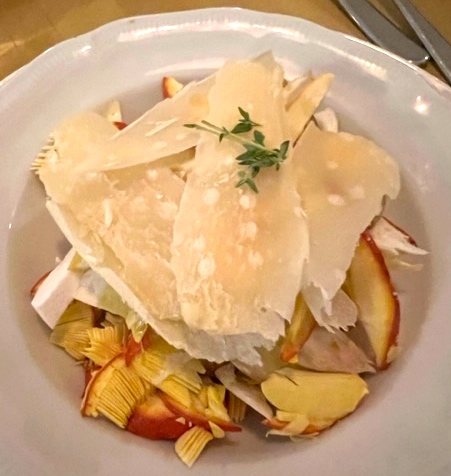
 

I was served a dish as sensational as Proust’s madeleine in Bologna last fall. It consisted of only two ingredients: cep (porcini) mushrooms and aged Parmesan cheese. They arrived at the table, a loose pile of bite-size fresh mushroom pieces covered with broad, paper-thin slices of aged Parmesan cheese. What this pairing lacked in eye-appeal it more than made up for when eaten. Their combined flavor was overwhelming delicious 

My initial reticence to consume a raw wild mushroom dissolved after a couple of bites. So did my assumption that cooking would have improved their tastes.  The synergy of their combined flavors was magic in my mouth. 

I will admit that until that moment, umami, was a taste I did not fully appreciate.  In my defense, scientifically verified taste receptors for umami were confirmed just 23 years ago.  What Asian cuisine had already discovered a century before was finally codified in the west  But I’m getting ahead of myself. 
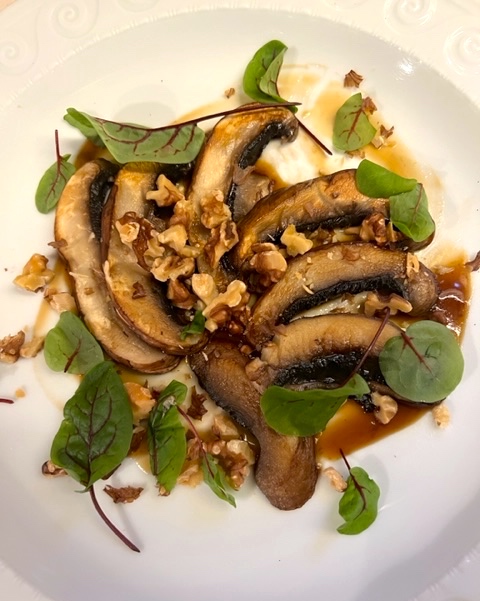
Skillet Roasted Portabella Mushrooms with Coffee and Walnuts 

The word umami is a rough translation of the Japanese word for ‘deliciousness’.  Japanese chemist Kikunae Ikedi identified the amino acid, glutamate, as the source of the savory flavor in dashi, a broth of seaweed and dried fish that is fundamental to Japanese cuisine. A year later, Dr. Ikeda and an entrepreneurial partner introduced a salt of glutamic acid, MSG, on the commercial market. A umami hack was born. 

Glutamate is an important regulator of cognition, memory and mood in all plants and animals.  A fair amount of umami is present in our diet of eggs, meat, fish, vegetables (especially tomatoes and mushrooms) and nuts. Glutamate levels are also high in fermented foods such as cheese and cold cuts.  How recent is our awareness of umami?  The ancestry of Asian fish sauce can be traced back to garam, the fermented condiment that the Romans added to everything.  

The addition of MSG to Asian cuisines has been commonplace for almost a century.  Its commercial use in the States since 1950's has been the source of controversy. A small percentage of sensitive diners have complained of headaches, dizziness and other short-term discomfort from MSG.  These effects have not been replicated in scientific tests, but the FDA now requires MSG to be listed as an ingredient when it is present in manufactured food products.
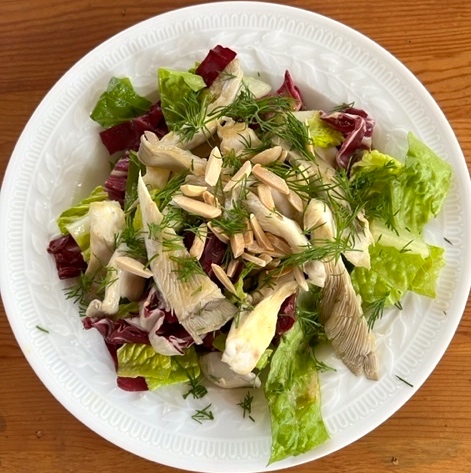
Radicchio and Mushroom Salad with Lemon Anchovy Vinaigrette

My umami conversion in Bologna was the result of an intuitive pairing of two glutamate-rich ingredients. The intense concentration of sweet, salty and sour tastes created by the bacterial activity in aged Parmesan intensified the mushroom’s earthy richness.  All the taste receptors on my tongue were operating at full capacity.

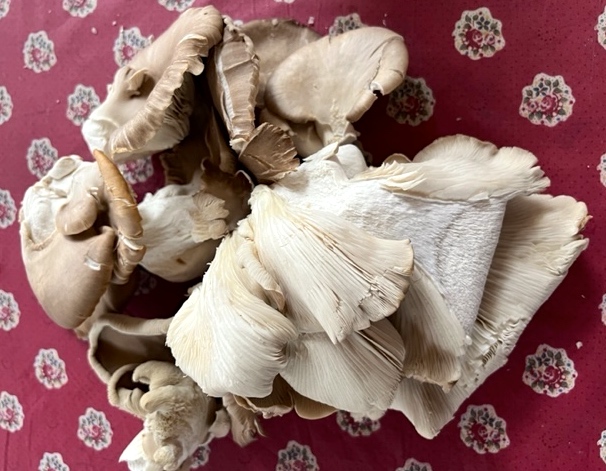
Since my return from Italy, I have attempted to recreate that magical synergy in my cooking. The recipe for Skillet Roasted Portabella Mushrooms with Coffee and Walnuts is adapted from the website of the Harvard T.H. Chen School of Public Health. The sauce contains a spectrum of tastes that accentuates the taste of the mushrooms and walnuts.  The Radicchio and Mushroom Salad with Lemon Anchovy Vinaigrette is my own creation with oyster mushrooms and almonds with a vinaigrette enabler.  Both recipes have encouraged me to adventure into new taste combinations in the service of umami.

Enjoy!


  • Written by Madelaine Bullwinkel

COOKING FROM THE BOTTOM OF THE SEAFOOD CHAIN


SARDINE SANDWICH WITH HORSERADISH CREAM 

As strange as it may sound, the fresh seafood in our markets is a less healthful choice than the sardines sold in the canned fish section. The reason is simple: 90% of our current seafood supply is imported.  It is either farmed thousands of miles away or is netted and frozen aboard large factory boats and defrosted at the point of sale. Also worrisome is the lack of reliable safety standards for methylmercury and PCB’s that accumulate in carnivorous wild salmon and tuna at the top of the food chain.  Sardines are wild-caught and quickly preserved close to shore.  They retain more of their omega-3 oils and are less exposed to pollution than larger fish.  Canned sardines also make a delicious and easily assembled meal any time of day.

Americans tend to regard canned seafood as food for the poor and for their pets.  Canning fish was originally created to deal with a surplus in French waters in the 1830’s and later used to feed troops during wartime.  The process quickly spread down the European coastline.  Now, two centuries later, the preferred producers of the plump pilchard variety come from family businesses in Portugal and Spain. Some have been in business since the 1880’s.  Canned sardines are served in fine dining restaurants in France, often to the surprise of American tourists.  Yes, there are even sardine connoisseurs who collect vintage cans just as wine lovers do prized bottles.

Sardine canning spread to the States in 1875 first in New York and then in Maine.  American sardines are a smaller, firmer varieties of herring found along the Atlantic and California’s  Monterey coastlines.  They quickly became a popular low end dining choice throughout the country for more than a century.   The last cannery to close on the East coast was in Maine in 2010 forced out by an increasing number of alternative budget foods such as ramen.  The last canning operation in California had closed in 1967 due to declining interest and with the disappearance of these small fish from Pacific waters. 

The challenge of dealing with a lonely can of sardines in my pantry finally nudged me past the ‘always buy fresh’ tipping point into the fascinating world of canned seafood.   Up to that point, my knowledge of sardines was limited to an ancient Roman recipe for garum.  This was a condiment they prepared by salting a catch of sardines and letting it ferment in the sun for several months before draining off the juices. The Romans seasoned almost everything with garum, much the way Americans use ketchup.  A modern, sanitized and bottled version of garum is currently sold with Southeast Asian ingredients as fish sauce.

The pleasure of cooking with high quality canned seafood is its simplicity.  Sardines, in particular, have been a staple ingredient in cooking cuisines around the Mediterranean basin since Roman times.  They come packed in oil ready to be added directly in sandwiches, salads and pasta dishes with  bottled condiments such as capers, roasted peppers, preserved garlic and harissa.  Stay tuned for future information and recipes as I continue cooking fish from the bottom of the seafood chain.


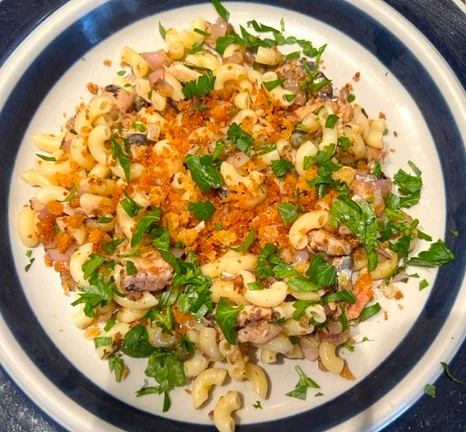
 ELBOW MACARONI WITH SARDINES, BREADCRUMBS AND CAPERS

Additional Reading:

The Surprisingly Rich History of Sardines

Rules to follow when you buy fresh seafood

Marion Nestle’s book What to Eat (2010) details the problems concerning methylmercury in fish.

Budding canned fish connoisseurs can shop for sardines at: TinCanFish.com.


. 

  • Written by Madelaine Bullwinkel

DEPT. OF CRAVINGS: Soup from the Pantry


It could be the fact that I have lowered the temperature on my thermostat this winter, but I have recently developed daily cravings for a steaming bowl of soup.  Cravings need not annoy cooks who usually prepare soup ‘from scratch’. In times of crisis that pantry of half-forgotten canned goods can come to the rescue. 


These are ingredients purchased for dishes we never got around to making, ones bought because they were on sale or were just flat-out an impulse purchase. The ability to make use of this cache offers redemption, a chance to creatively recycle past intentions.  You may be surprised how quickly compatible ingredients can be assembled. 


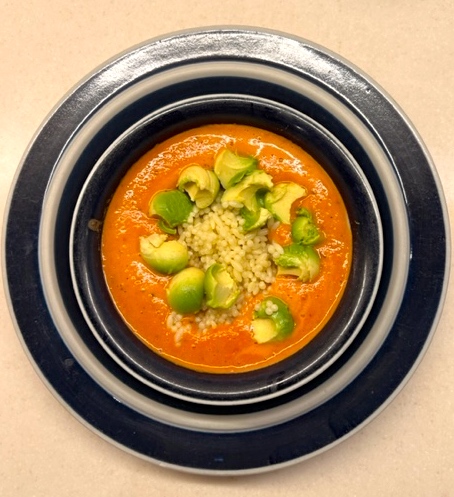
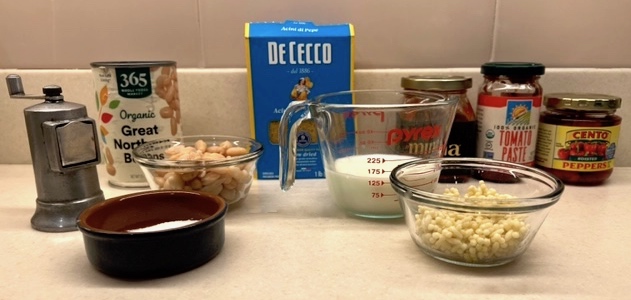
I recently combined cannellini beans, roasted red pepper, tomato puree and harissa paste. A blender churned these ingredients into a thick puree and microwave warmed them in a couple of minutes.   Salt, pepper and a splash of red wine vinegar brightened their flavors.  My craving also required a element of texture which was filled by a half-cup of refrigerated orzo pasta.  


Prep time for my steaming bowl was about 10 minutes and left me feeling as successful as if it had taken an hour. This warranted one last look in the refrigerator for a colorful garnish.  I scooped out small balls of avocado to spread over the soup while I toasted a slice of sourdough to accompany it. Voila! 


Recipe for Pantry Soup