- Written by Madelaine Bullwinkel
EXPERIENCE FRANCE AT HOME
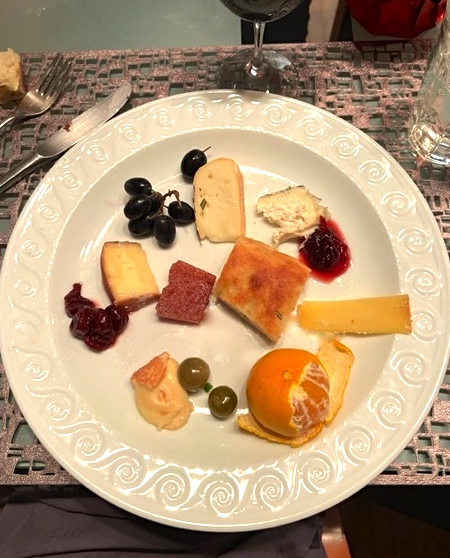
A meal composed entirely of cheeses from France conjures the feeling of ‘being there’ in Francophiles and will convert anyone eager to move beyond sliced cheddar. Each piece is much more than a well-preserved, cultured milk solid. It boasts a feisty pride in regional tradition and fidelity to a strict set of standards. A meal of plastic-wrapped namesake cheeses, even if you can find them at the market, are costly and merely whisper their identity when compared with those shipped directly from France.
The reason is simply that these traditional French cheeses are made from raw or briefly heated (thermized) milk that retain much of its natural bacteria and enzymes. These are fragile living foods. French cheese containing live microorganisms are held, uncovered, in controlled conditions for sixty days to age out potential pathogens. During that time they develop flavor unique to their place of origin (terroir). Those then wrapped in plastic for export say 'raw milk cheese', but their bacterial activity stopped once deprived of air.
Since the middle of the 19th century, the French have developed standards and a system of verification to protect the quality of their prized agricultural products. French wines were first to receive AOC (Appelation d’Origine Controlée) certification. In 1925, Roquefort was the first among currently forty cheeses to attain this status. Today, the AOC label has been replaced by the European Union’s AOP designation (except for French wines) creating uniformity among member nations.
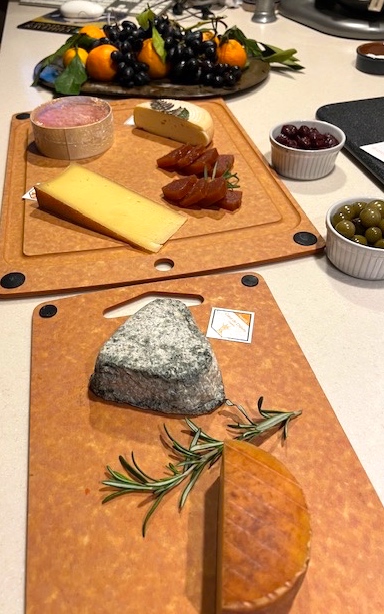
For a recent holiday meal, I chose cheeses that announce their originality. They included a Corsican sheep’s milk cheese decorated with a lacy fern leaf, a heart-shaped goat cheese coated with ash and a unctuous round of Epoisses de Bourgogne wrapped in paper and packed in a wooden box. The mild barnyard scent given off by the Epoisses leant a note of authenticity to the dining room's atmosphere.
It's not going too far to say that the tradition of making raw milk cheeses is symbolic of French identity. A frustrated President Charles de Gaulle put it bluntly when he said “How can you govern a country that has two hundred and forty-six varieties of cheese?” Imagine the job of governing France today, some seventy years later, knowing that the number of these cheeses has increase to more than 350.
There are over 100 individual cheeses and a couple of pre-chosen selections displayed on the Fromages.com website. When shopping, I search out cheeses from a variety of milk sources (cow, goat and sheep) and from a variety of regions (Normandy, Auvergne, Loire Valley, Provence, Pyrenees). My recent FEDEX delivery arrived two days later than promised during the Christmas holidays. Each cheese was wrapped in paper, nested among frozen gel-packs and in excellent condition. There are risks involved when ordering a perishable product from Europe, but most of the reviews on the Fromages.com Facebook page are as positive as mine.