
- Written by Madelaine Bullwinkel
COOKING FROM THE BOTTOM OF THE SEAFOOD CHAIN

SARDINE SANDWICH WITH HORSERADISH CREAM
As strange as it may sound, the fresh seafood in our markets is a less healthful choice than the sardines sold in the canned fish section. The reason is simple: 90% of our current seafood supply is imported. It is either farmed thousands of miles away or is netted and frozen aboard large factory boats and defrosted at the point of sale. Also worrisome is the lack of reliable safety standards for methylmercury and PCB’s that accumulate in carnivorous wild salmon and tuna at the top of the food chain. Sardines are wild-caught and quickly preserved close to shore. They retain more of their omega-3 oils and are less exposed to pollution than larger fish. Canned sardines also make a delicious and easily assembled meal any time of day.
Americans tend to regard canned seafood as food for the poor and for their pets. Canning fish was originally created to deal with a surplus in French waters in the 1830’s and later used to feed troops during wartime. The process quickly spread down the European coastline. Now, two centuries later, the preferred producers of the plump pilchard variety come from family businesses in Portugal and Spain. Some have been in business since the 1880’s. Canned sardines are served in fine dining restaurants in France, often to the surprise of American tourists. Yes, there are even sardine connoisseurs who collect vintage cans just as wine lovers do prized bottles.
Sardine canning spread to the States in 1875 first in New York and then in Maine. American sardines are a smaller, firmer varieties of herring found along the Atlantic and California’s Monterey coastlines. They quickly became a popular low end dining choice throughout the country for more than a century. The last cannery to close on the East coast was in Maine in 2010 forced out by an increasing number of alternative budget foods such as ramen. The last canning operation in California had closed in 1967 due to declining interest and with the disappearance of these small fish from Pacific waters.
The challenge of dealing with a lonely can of sardines in my pantry finally nudged me past the ‘always buy fresh’ tipping point into the fascinating world of canned seafood. Up to that point, my knowledge of sardines was limited to an ancient Roman recipe for garum. This was a condiment they prepared by salting a catch of sardines and letting it ferment in the sun for several months before draining off the juices. The Romans seasoned almost everything with garum, much the way Americans use ketchup. A modern, sanitized and bottled version of garum is currently sold with Southeast Asian ingredients as fish sauce.
The pleasure of cooking with high quality canned seafood is its simplicity. Sardines, in particular, have been a staple ingredient in cooking cuisines around the Mediterranean basin since Roman times. They come packed in oil ready to be added directly in sandwiches, salads and pasta dishes with bottled condiments such as capers, roasted peppers, preserved garlic and harissa. Stay tuned for future information and recipes as I continue cooking fish from the bottom of the seafood chain.
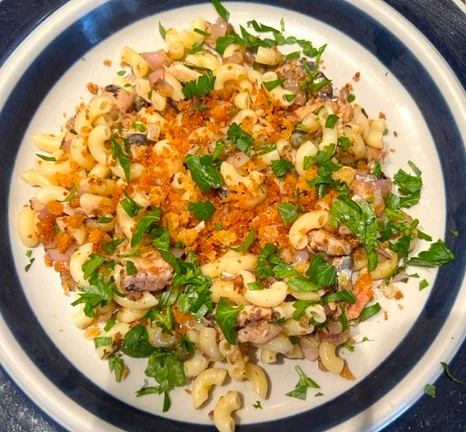
ELBOW MACARONI WITH SARDINES, BREADCRUMBS AND CAPERS
Additional Reading:
The Surprisingly Rich History of Sardines
Rules to follow when you buy fresh seafood
Marion Nestle’s book What to Eat (2010) details the problems concerning methylmercury in fish.
Budding canned fish connoisseurs can shop for sardines at: TinCanFish.com.
.
