A+ A A-
  • Written by Madelaine Bullwinkel

Mastering the Art of Stay-at-Home Cooking


The announcement for citizens to shelter-in-place to avoid exposure to the coronavirus will arrive in your area soon if it hasn't already.  Here in Illinois, schools, restaurants and virtually all social gathering places were closed in domino fashion on orders of Governor Pritzker over the weekend.  For those of us who are always thinking about the next meal, the prospect of spending two weeks (at least) in isolation feels like forever.  Our choices are limited.  There's supermarket fare of pre-cooked foods and order-in pizza. If you decide to do your own cooking, well, I happen to have a plan for that (without having to consult Elizabeth Warren).

Since a bonafide stay-at-home cookbook for the current situation has yet to be written, we might as well write our own.  I propose we improvise a collection of simple dishes using staples already in our refrigerators, cupboards and spice collections. The results will contain unusual combinations, but these unusual times require a spirit of adventure.  As luck would have it, I have a sample recipe to share.  You probably saw that coming. 

If you have eggs in the refrigerator, an onion of any kind, a few spices and six cherry tomatoes you can make what I think of as one of the 'real foods' of India.,  Parsi Scrambled Eggs is a staple dish on hotel breakfast buffets on India's west coast.  It checks all the boxes for our needs in quarantine conditions:  It is healthful, delicious any time of day, highly receptive to improvisation, and it’s easy to prepare.  The term Parsi is the name Indians gave to the followers of the Persian prophet Zoroaster in the 7th century when they  emigrated from what is now Iran to avoid persecution.  The Zoroastrian belief that the egg is a symbol of fertility and new life inspired a number of interesting egg dishes.  You may want to check them out.

Let's start a  collection Shelter-at-Home recipes.   Send me three photos: 1. the interior of your refrigerator, 2. your food pantry and 3.your spice collection.  (Don’t bother to clean beforehand.)  I will then send you a recipe to try using the ingredients you have on hand.  If we both agree it's a winner, I will share it on this blog.  You can also send me a photo and a recipe that you've prepared from your supplies on hand.  If it tests out, I will share it online. 

Working in concert,  we can make the most of life at the table while we stay at home.

PARSI SCRAMBLED EGGS 

3 large eggs

1/4 teaspoon salt

2 tablespoons butter or oil

1/4 cup minced onions of any variety

1/8 teaspoon powdered cumin

1/8 teaspoon powdered turmeric

1 - 3 finely chopped green chilis or up to 1/2 teaspoon powdered chili

1 teaspoon grated fresh ginger or 1/8 teaspoon powdered ginger

4 large cherry tomatoes, each cut into 6 pieces

3 tablespoons fresh minced cilantro, parsley or dill (1 tablespoon if dried)

Optional: 6 cooked asparagus stalks cut into 1” lengths or left whole 

Beat the eggs together with the salt in a small bowl, and allow them to stand 15 minutes while preparing the rest of the recipe. ( Food Geek Alert: Salt will denature the yolks and the cooked eggs will not ‘weep’ on the plate.) 

Cut and measure the remaining ingredients, then heat the butter or oil in a non-stick skillet.  Saute the onions until they soften, stir in the  cumin, turmeric and chili peppers. Cook the pepper for a minute or two before adding the ginger. If all the seasonings are dried stir them briefly and add in the tomatoes  When the tomatoes juices have reduced.  Sprinkle on the freshly minced or dried herbs and pour the eggs into the skillet.  As the eggs begin to set, circle the pan with a spatula turning the eggs in toward the center.  Shake the pan and break up the curds while cooking them to the desired firmness. Turn the eggs out onto a plate and serve immediately.

Optional Vegetables: Boil or steam the asparagus in advance.  Add cut pieces to the skillet just before the eggs, folding them in as they cook or pile the scrambled eggs over warm, whole cooked spears before serving.  Other delicious vegetable additions include peas, chopped broccoli or cauliflower.

  • Written by Madelaine Bullwinkel

A "Real" Food Adventure

My New Year's resolution is the unachievable kind.  I'm good with that; I intend to renew it.  It's my intention to move out of my comfort zone in the kitchen.  That zone has become too restrictive now that I am relying more on plants for protein.  I'm on a quest to broaden my approach to seasonings.  What better way to start than with a firsthand experience with one of the world's oldest vegetarian cuisines? 

So, I spent two weeks last month in India on a "real" food adventure with Intrepid Travel.* The trip exceeded my expectations every day.  Here are three quick luncheon scenarios to give you some idea of where our itinerary took us:  


On our first full day in Delhi we joined hundreds of guests that were served lunch in a Sikh temple. First we removed our shoes, and sat with worshipers for a few minutes.  Our guide then led us on a quick tour of the adjacent kitchen containing a row of bubbling cauldrons and a griddle the size of a double bed.  Teams of volunteers were cleaning, cutting, cooking and serving lunch to a steady stream of diners all seated cross-legged on the floor in the temple’s large dining hall.  We joined them and received ladles-full of curry served with warm chapati.   


At lunchtime two days later we standing up around a table in an open market on the corner of a busy intersection in Jaipur hungrily snarfing up the street foods our guide brought us.  (The sweets were just as tasty.)  We had another memorable lunch three days later at the end of a morning Jeep safari through a village and surrounding farm land in rural Bijaipur.  The setting was a lake resort where the resident chef demonstrated an elegant smoked mutton (aka goat) curry.  

Soon after returning home, I made a pilgrimage to Chicago’s Little India which occupies a strip along Devon Ave on the city’s far Northside.  There I purchased the most important piece of equipment in a North India kitchen: a spice box.  Mine holds seven metal cups filled with seasonings essential to North India cooking: ground chili, cumin, garam masala, coriander and turmeric as well as green cardamom pods and cumin seeds.   (There is a photo of a complete spice collection at the top of the page.  It was taken in a private home home in Jaipur where we observed our hosts prepare a thali dinner.)

With my new spice box and recipes saved from the trip at my side, I am attempting to recreate the meals we prepared.  The results have been good enough, but something is always lost in translation.  The differences in equipment is not an issue.  The meals prepared for us were cooked on portable gas burners in heavy, handle-less round pots for which we have good replacements.  Sauces were puréed in blenders less modern than our own.  The most time-saving device I observed was a pressure cooker which was used to cook chickpeas and dals.

The basic techniques of North Indian cooking appear easy to learn. A curry begins with the addition of garam masala spices to what we would consider a copious amount of hot oil.  Chopped or sliced onions and a paste of garlic and fresh ginger follow.  Beans and vegetables go into the pot or are prepared on the side and in added later.  Small amounts of various powders and seeds are added at specific times, and this is the hard part of mastering Indian cooking.  Secrets are hiding in plain sight as each cook chooses which and how much of a seasoning to add.  Learning to use Indian spices is akin to learning a new language.

The flavors of India are slowly working their way into my cooking.  It has become my habit when making oatmeal to first drop garam masala spices into boiling water.   Mustard oil sometimes replaces olive oil in my salad dressings. My granddaughters are learning to roll out chapatis and paratha dough filled with chopped curry, fenugreek and mint leaves.  

This Saturday's knife skills class at the Alliance Francaise in Chicago will also benefit from my experience in India.  The class will make a Vegetarian Cassoulet with a garam masala of French seasonings.  Is that even possible?  Come join us to find out, and stay tuned to this blog!

**********

I highly recommend the Intrepid Travel’s tour called, India “Real” Food Adventure (HHZM)

Request Tour Leader: Ghanshyam Singh Rathore. 

If you have questions about travel to India, feel free to contact me at This email address is being protected from spambots. You need JavaScript enabled to view it..


  • Written by Madelaine Bullwinkel

THE SECRET INGREDIENT IN MY HOLIDAY KITCHEN

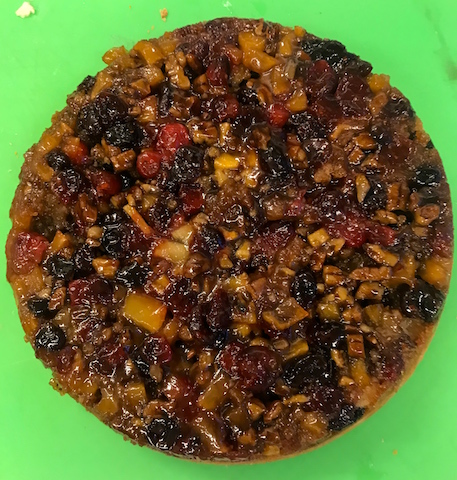
CRANBERRY UPSIDE DOWN CAKE

Every year in early January I file away copies of the recipes I’ve prepared over the holidays.  The following December these smudged pages are a pleasure to review for the memories and inspiration they provide.  I then throw most of them away.  

The truth is, I rarely repeat holiday meals. As Tina Turner says in ‘Proud Mary’, “I don’t do nothin nice and easy”.  The major components of the meal don’t change much, but my need to reinvent them is a constant.   


ORANGE MARMALADE WITH CRANBERRIES

Take the small, homespun cranberry.  It’s an ideal ingredient for conjuring new flavors in a holiday kitchen.  Almost as if by design, this native  American vine bears fruit in late fall just when it’s most needed to complement rich roasted meats and super sweet holiday desserts.  Cranberries are uncompromisingly tart, loaded with pectin and a stunning red (color counts).  They are the perfect foil both fresh and dried in a sauce, compote, preserve or as solo addition for any number of holiday dishes. 


NICK'S QUICK BRIOCHE

Two new cranberry recipes joined my growing collection this year.  One is the Cranberry Pecan Upside Down Cake pictured above.  It’s my take on a recipe for the more traditional pineapple version that appears in Thomas Keller’s book Ad Hoc at Home.  

The other addition is an Orange Marmalade with Cranberries.  Just one thinly sliced orange and a few ounces of cranberries will produces three cups of ruby red preserves.  The naturally high pectin level in both fruits insures a firm gel in record time.  While oranges and cranberries are a common pairing, it’s a cinnamon stick simmering with the fruit that provides delicious synergy.  Please pass the brioche!

Happy Holidays from my kitchen to yours!