A+ A A-
  • Written by Madelaine Bullwinkel

FIG JAM
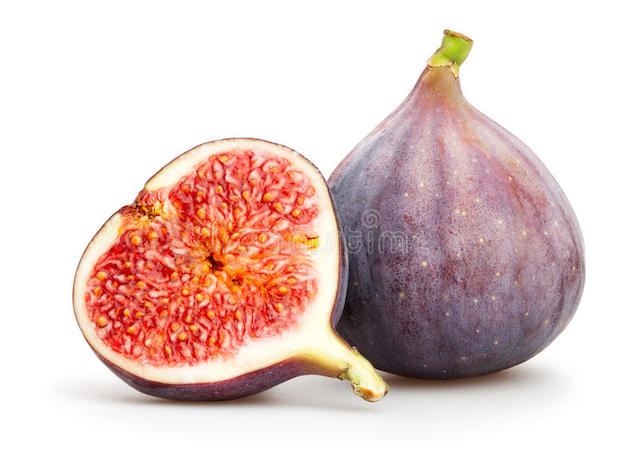
 

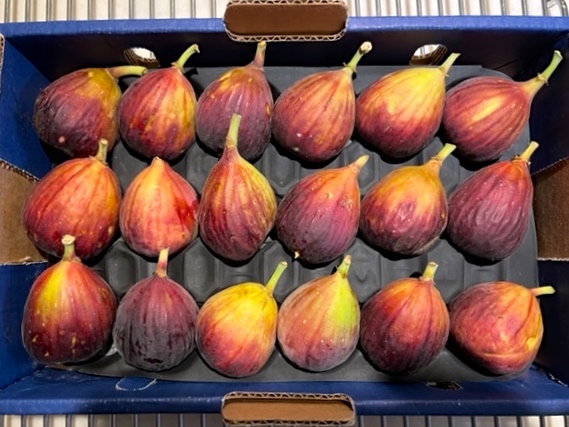
Ripe figs are irresistible. They are in our markets now, boxed like chocolates, each one nestled in its own berth.  Who could guess that their tender purple skin covers a riot of strawberry-red strands that are sweet and as fragrant as a flower?  In fact, the fig is filled with tiny flowers turned outside in.  Its pollination story is one of nature’s stranger things. 


A tiny female fig wasp is tasked with laying its eggs inside an undeveloped female fig by entering the apex on the underside of the fruit. The wasp also carries pollen that fertilizes the fig's ovaries and it ripens to maturity. When the wasp eggs hatch in the fig, a new generation of female wasps, fertilized by the males among them, leave the fig through paths forged by their wingless brothers to continue the cycle. Yes, there are figs of both sexes on a fig tree, but no, the male figs do not develop when pollinated by a wasp, nor can they leave a female fig after fertilizing their sisters. Nature reverses gender roles with impunity. The fig then produces an enzyme that dissolves wasp remains leaving the fruit succulent, ready to eat by all but the most devout vegans.


Don't let this amazing story deter you from eating figs. The commercially grown figs we purchase in the grocery have been pollinated with a hormone spray.  An adventurous eater must pick and eat a ripe fig from a roadside tree to experience a wasp-pollinated fruit and wonder at what has transpired to create it.  
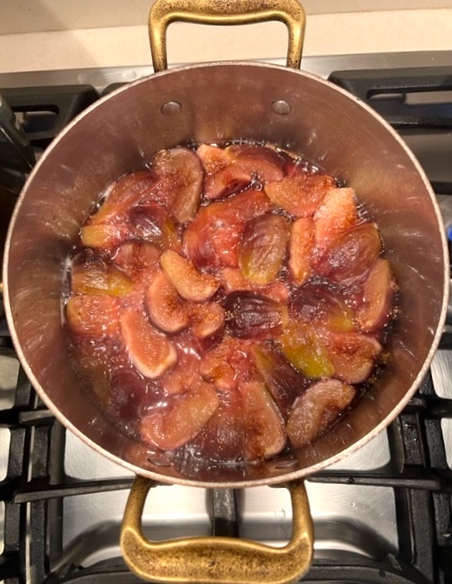


The figs age quickly once I bring them home, faster than I can eat them. I quickly preserve at least half of them in a light sugar syrup.  They cook in ten minutes, and an immersion blender turns their highly fibrous interior to a pudding-like consistency.   Small amounts of powdered cinnamon, ginger and star anise, stirred into the cooked figs, add an exotic aroma. When I can resist consuming fig jam out of the jar, I serve it with breakfast breads and cheeses.
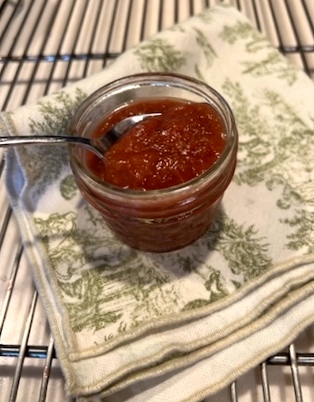


FIG JAM 


Ingredients for 2 cups: 

1 cup water 

1/3 cup sugar 

1-pound ripe black mission figs (9-10) 

1/8 teaspoon ground cinnamon, ginger and star anise 


Bring the water and sugar to a simmer in a saucepan, stirring in the sugar to help it dissolve.  Trim the stem end and halve the figs before adding them to the simmering syrup.  Partially cover the pot and maintain a slow simmer for ten minutes or until the figs are soft.   


Remove the fruit pieces with a strainer and reduce the syrup to ½ cup.  Stir the spices into the hot syrup and pour them over the fruit.  Puree the mixture and pour into clean jars.  Store in the refrigerator between uses and consume within two weeks.  


  • Written by Madelaine Bullwinkel

RATATOUILLE MAKEOVERS


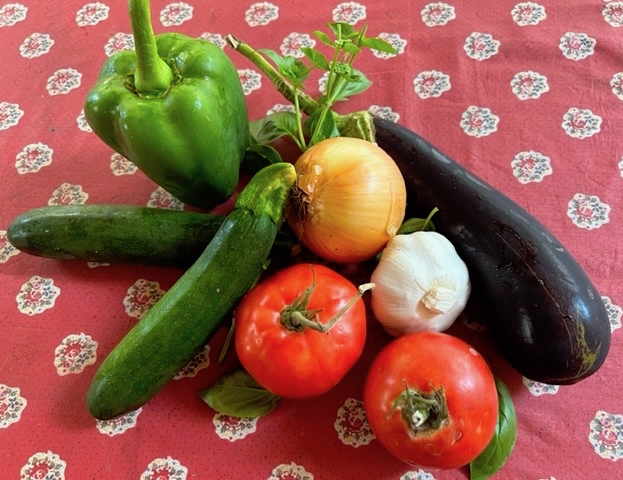
Welcome to ratatouille season. Cooks and gardeners have been waiting for late summer when this rustic vegetable stew tastes its best. Ratatouille's quirky name is a riff on French military slang for grub, ‘rata’, and ‘touille’, which means to stir or toss.  The resort city of Nice claims to be ratatouille’s hometown, but mixtures of eggplant, tomatoes and peppers and onions are commonplace in countries surrounding the Mediterranean  What’s amazing is the worldwide fame this simple dish has achieved in the past fifty years.  


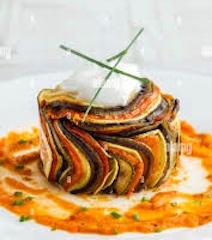
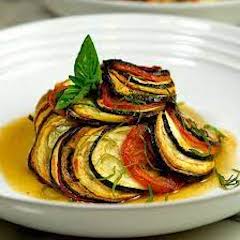
Ratatouille first drew public attention when aspiring young Chef Michel Gerard gave it a gastronomic makeover in the 1970's.  Just as her fairy godmother transformed Cinderella, Gerard thinly sliced ratatouille's

normally rough-cut vegetables and fanned layered slices in concentric circles on a plate for a glamourous presentation.  This naturally healthful dish became a signature dish in Gerard’s disruptive, low-fat cuisine, 'Cuisine Minceur'.  He christened his elegant version, Confit Byaldi, a name already given to Turkish stuffed eggplant, Imam Bayildi, which literally means “the Imam fainted”. 


Gerard’s spa cuisine and his Confit Byaldi might have faded in the annals of French gastronomy had Pixar Films not chosen both the original name, beginning with 'rat', and its fine dining appearance as metaphors in the storyline of their 2006 animated feature.  The film begins with an unlikely rodent hero with an equally unlikely palate who ingratiates himself with the kitchen staff of a failing French restaurant.  In addition to his keen sense of taste, rat has the uncanny ability to channel the restaurant’s chef-owner who died rather than face the decline of his restaurant.  Tension builds near the film’s end as we watch the rat instruct a clueless young cook in the preparation of Confit Byaldi. The dish has been ordered by the ghoulish food critic whose review will determine the restaurant's fate.   


Pixar hired American Chef Thomas Keller to update Gerard’s Confit Byaldi for this film.  Keller created a more structured presentation of vegetable slices and added two sauces. At the film’s climactic moment, critic Anton Ego casts a skeptical eye at his precious vegetable serving.  When the first bite delivers flavors that send him reeling back to beloved childhood memories of his mother’s ratatouille, he hungrily gobbles up the rest.  Anton writes a glowing review, saves the restaurant’s reputation as well as the audience’s confidence in food critics.


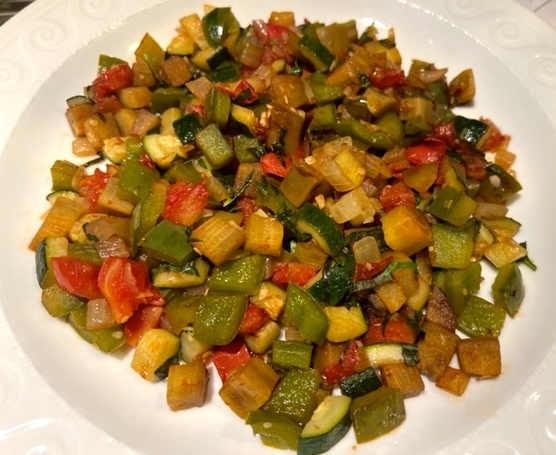
You too may want to try your hand at reinventing ratatouille in your kitchen. There's the New York Times classic recipe which is long and heavy on the olive oil.   I take a lighter hand to the vegetables, dicing and sautéing them in a skillet with a thin layer of hot olive oil.  They are added to the pan according to the time it takes for them to cook through.  Stirring is a must, but the process is rapid.  The veggies retain their color, shape and flavor when eaten together.  I stir in a splash of balsamic vinegar with a shower of thinly sliced basil leaves at the very end. They accentuate the natural sweetness of the vegetables and add a memorable aromatic finish. Link to my Ratatouille recipe.


  • Written by Madelaine Bullwinkel

SUMMER FRITTATAS

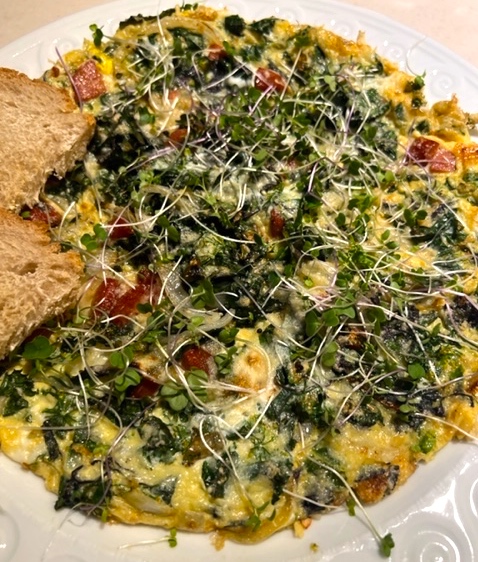
 Onion, Kale and Andouille Frittata with Spicy Salad Microgreens


The frittata is an especially satisfying dish to prepare in summer when the addition of locally grown vegetables and herbs heighten its renown as an easy, healthy and inexpensive meal.  The Italians may own the name, frittata, but its origin story is shared with the Spanish tortilla, Persian kuku sabzi and the French omelette, to name just a few.  You might as well call the one you make whatever you like. 


There are no required ingredients for a frittata other than eggs. It is easy to customize its thickness and control the time it takes to cook by adjusting the size of the skillet in relation to the quantity of ingredients. A frittata is delicious served hot or at room temperature any time of day or night. It makes a welcome leftover reheated in the microwave. What's not to like?


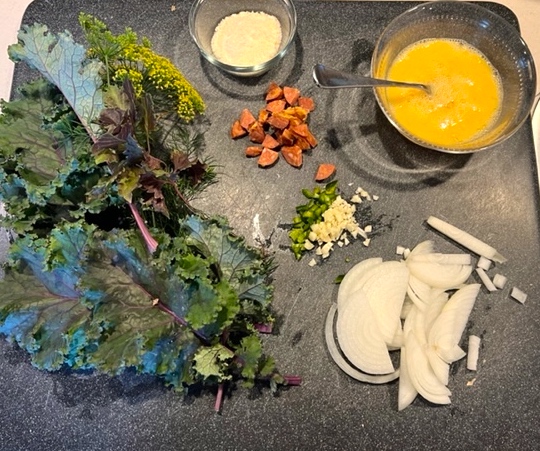
 Frittata Mis en Place


On a recent evening, I prepared a frittata that featured kale and herbs (dill, basil, parsley) from my garden. I added a few pieces of andouille sausage, a sliver of jalapeño pepper, one-fourth cup grated Parmesan and half a yellow onion from the refrigerator.  In a separate bowl, I thoroughly blended two large eggs, two whites and one-quarter cup cool water.  My pantry staples included a clove of garlic, olive oil, sea salt and pepper. 


I first rinsed the kale, removed the thick center rib, rolled and sliced the leaves.  Next I peeled and sliced the onion, then finely chopped the garlic and pepper.  The herbs, finely minced, were stirred into the eggs along with salt and several turns of the black pepper grinder.  Once all the ingredients were prepped, I fired up the heat under a nine inch stainless steel pan.  It was showtime. 


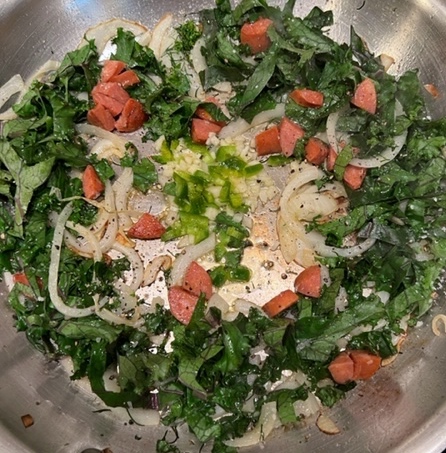
 I let a thin layer of olive oil get very hot in the pan before I added the sliced onions.  I turned down the heat and, let them cook, soften and turn translucent. After three minutes, I added the kale strips, scattered on some salt and stirred as they wilted.  The andouille pieces went in next, and, a minute later, I cleared the center of the pan, added a splash of oil and dropped in the garlic and chili pieces. They sizzled as I stirred them for thirty seconds before mixing them in with the rest of the vegetables. 


 The garlic and chili pieces make their entry.


It was then time to pour in the eggs and shake the pan to distribute the thick liquid evenly among the vegetables.  Given the large size of the pan and the relatively small number of eggs, this frittata cooked through in about a minute, or so it seemed.  I sprinkled on the Parmesan cheese and briefly brown the surface under a broiler. I used a flexible spatula to gently free the frittata it from the bottom of the skillet and slid it onto my plate. Voila!


A frittata invites spontaneity and freedom from a written recipe. You respond to your senses and stay completely attuned to the process. This pleasure is addictive. I anticipate the addition of homegrown tomatoes and basil-rich pistou to my August frittatas. The tomato pieces will go into the skillet after the garlic. I will cover the pan and cook them slowly for five minutes so they soften and render their juices before I add the eggs that have been enriched with at least two tablespoons of pistou.  I can hardly wait.