A+ A A-
  • Written by Madelaine Bullwinkel

COUSCOUS THERAPY
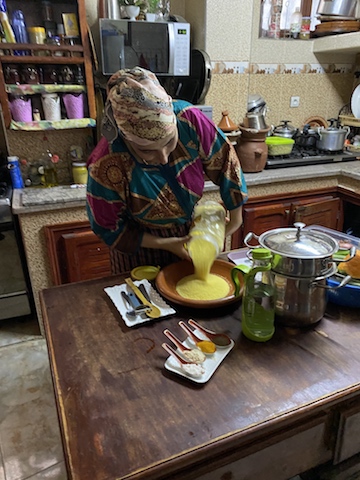
 

The kitchen is a great place to enjoy a little therapy as you prepare dinner.  Uncramp your hand from its grip on an electronic device, roll up your sleeves and pour grains of couscous into a dish. Watch it swell and soften as you prepare Morocco's national dish in the traditional manner. 


You might not expect little grains of durum wheat rolled to the size of an ant’s head to be so responsive.  We are in the habit of following package instructions to pour boiling water over dry couscous and waiting five minutes for lumpy, half-cooked results. This shortcut robs us of the pleasure of watching grains swell and soften between our fingers as they expand to hold the meat and juices of the stew they accompany.  


The hostess/cook of a Moroccan inn whom I observed on a recent trip made this one pot meal look easy.  First she layered chicken, spices, olive oil and vegetables in a couscoussière, a set of interlocking pots that Moroccan brides receive on their wedding day. (On the table in the photo above.) She then rinsed, drained and poured the couscous grains into a second pot whose perforated bottom would allow vapor to rise from the stew below and steam the grains to tender perfection.
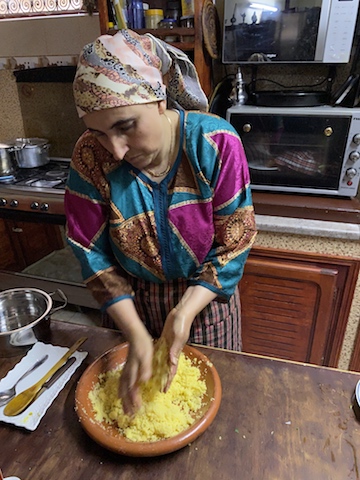


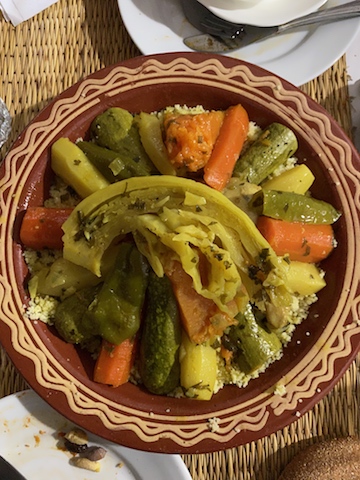
After twenty minutes, she turned out the couscous onto a bowl, poured water, salt and a little olive oil over it and worked it through her fingers, breaking up small clumps.  Another twenty minutes of steaming rendered the couscous ready to be piled high in a broad, shallow serving bowl.  The stew meat, vegetables and broth were arranged over it in a precise pattern worthy of a festival. 


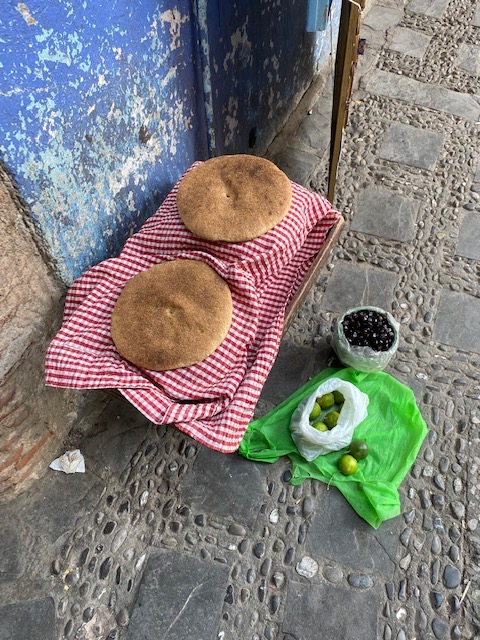
A Moroccan meal is not complete without a loaf of Khobz, traditional bread prepared by hand while the couscous simmers and steams.  The swirling action of the hand gathering flour and water into dough is much like that made when loosening grains of couscous.  Khobz dough rises once and expands into a dense, golden disk in a hot oven.  Moroccans tear off pieces of khobz to scoop up couscous grains with piece of stew, and juices.  Foreigners use forks until they gradually get knack of it. 


Join Chez Madelaine’s Zoom cooking class on February 5, 9:45 -11:30 am to watch the making Moroccan Couscous, Khobz and a radish and orange salad with lemon dressing.  We are always looking for converts to the pleasures of hands-on cooking. 


  • Written by Madelaine Bullwinkel

A MONTREAL HOLIDAY


I was among what a friend called 'the crazies' who traveled by air to visit family over the holidays. I left Chicago a day before the 24 hour Covid test went into effect and arrived in Montreal the afternoon the city closed all but essential businesses.   With useless food guides in hand, I stepped out of the tourist office into a winter wonderland.  The deserted streets in the Old Port quarter looked like a holiday movie set covered in lightly falling snow.     


This much was clear.  What I learned about Montreal in the coming week would be confined to walking its streets and visiting its food markets.  That suited me just fine. 


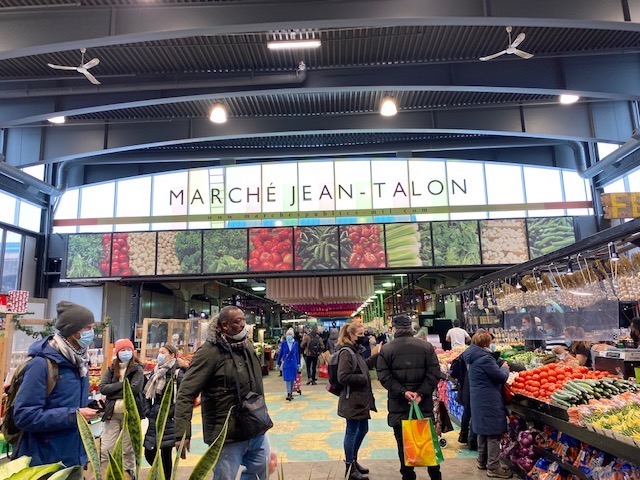
The Quebecois are as gourmand as Parisians when it come to the quality of their ingredients.  Paris relies on a central market the size of Monaco for its ingredients.  Montreal supports no fewer than twelve daily farmers’ markets.  The largest, Marché Jean Talon, fills an entire block and can swell to 300 merchants in the summertime.  The streets surrounding this covered market are packed with brick and mortar specialty shops and ethnic cafes.  One corner is anchored by the government-run liquor store.  Montreal’s Little Italy groceries are a five minute walk and were stocked with holiday delicacies the week of my visit.   


Montreal, like Paris, began as an island community that grew exponentially, but the Montrealais can still experience the wilderness that their city displaced.  Two-thirds of the province is still covered with boreal forest, a unique ecosystem owned and managed by the Canadian government.  It’s spruce and birch trees absorb and repurpose carbon dioxide while providing year round hunting, fishing and vacation opportunities. 


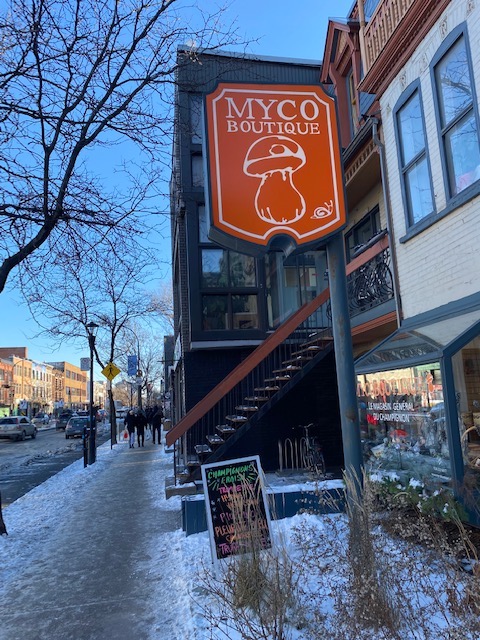
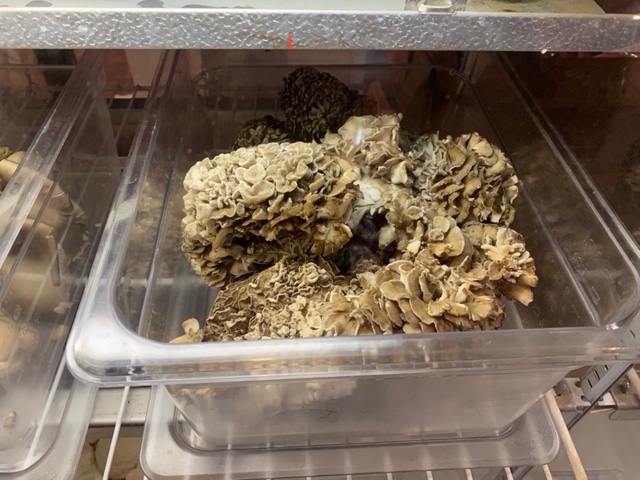
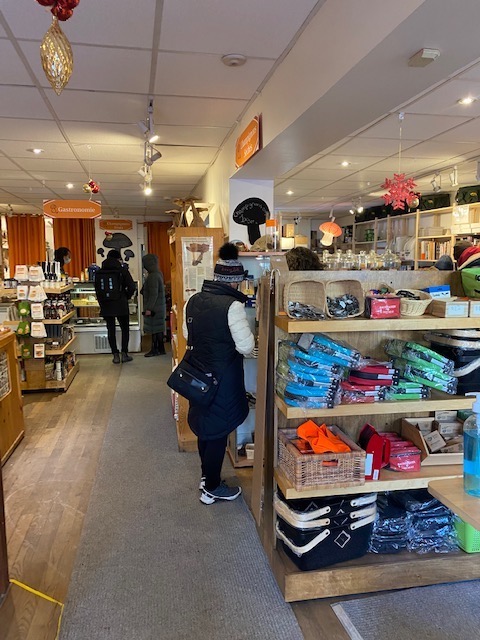
It’s no surprise then that  Mycoboutique has sprouted in downtown Montreal.  This small shop sells everything having to do with mushrooms including kits to grow mushrooms at home. A morning spent browsing in this shop will turn a confirmed carnivore into mushroom geek.  Of course, there is a vendor of fresh mushrooms at Jean Talon market.   As we purchased an oyster mushroom the size of a giant zucchini, the enthusiastic salesman instructed us to thinly slice and spread it on that evening’s pizza before it went in the oven.  The results were delicious! 


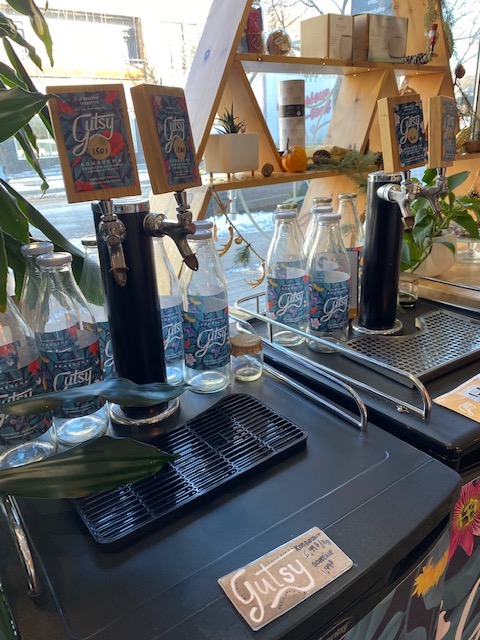
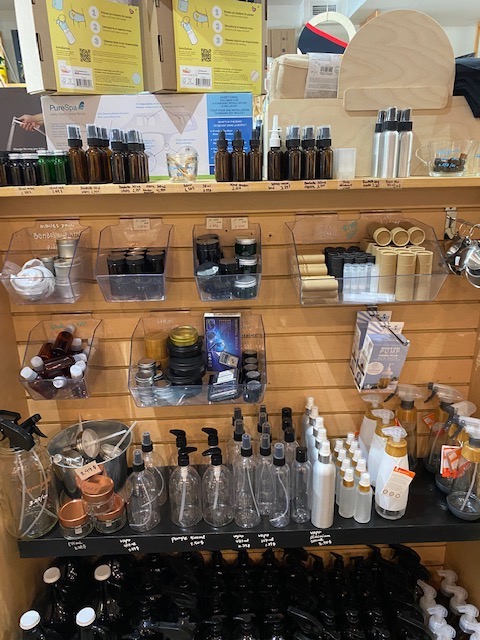
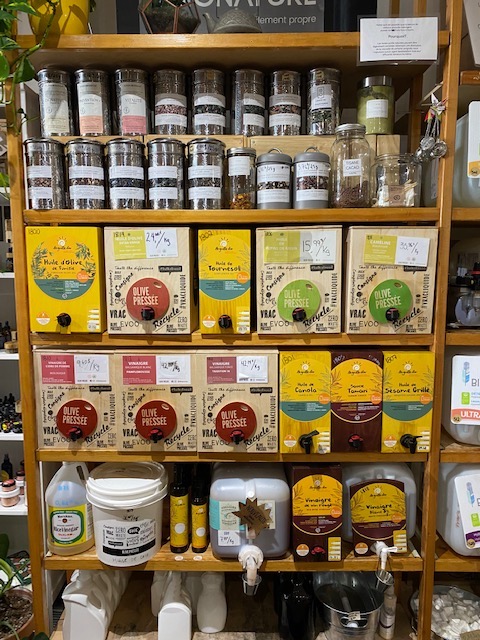
A growing number of small, no-waste (zero dechet) groceries is another example of Montreal’s eco-consciousness.   My daughter gathered glass jars to fill during our visit to La Reserve Naturelle down the street from her home.  This shop serves the neighborhood much as general store did in the frontier era.   Shoppers fill their containers with cleaning supplies, kitchen staples, cosmetics and skincare liquids from bulk containers.   Glass and reusable plastic containers are for sale to newcomers who arrive empty-handed.  Where else could one find two flavors of kombucha on tap?


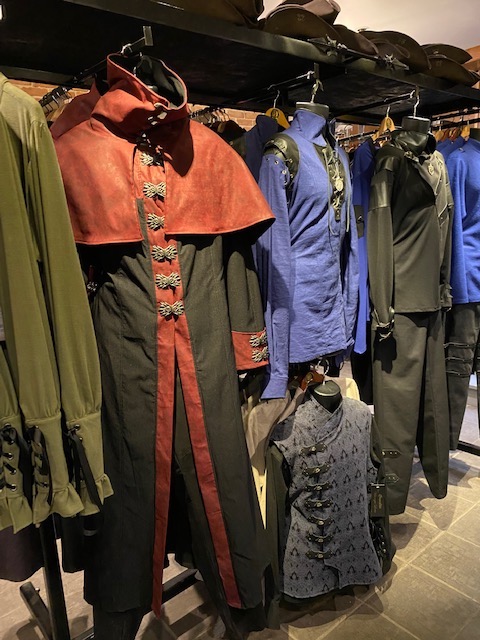
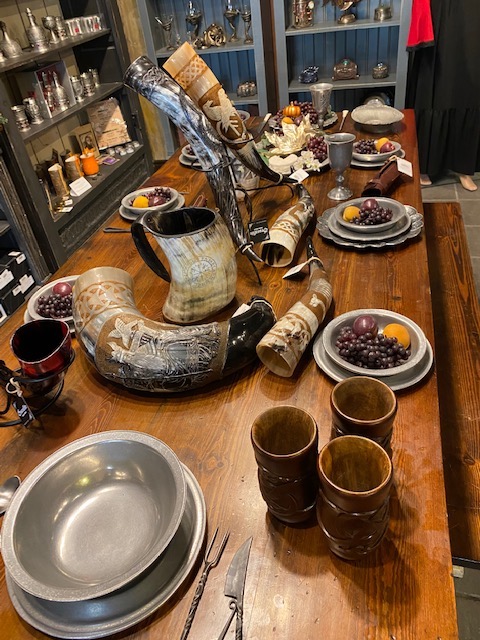
Just down the block from this progressive shop is a delightful strip of small storefronts that stretch the term ‘eclectic’ about as far as it can go.  Among the predictable bookstores, cafes, even an upscale restaurant, is a building rented to the  Universelle Church of Christ at ground level and a yoga studio with harnesses and straps hanging in the window upstairs.  Male and female mannequins wearing X-rated lingerie fill two full-length showroom windows of Seductions across the street.  At La Maison de Mademoiselle Dumpling, a few doors away, four Chinese cooks dressed in white stand around a table in the front window rolling and stuffing dumplings. Nearby, Boutique Medievale Dracolite will delight anyone ready for something completely different.  Twelfth century home furnishings and an extensive period dress selection for the chivalrous nobleman and his wife are packed into two floors.  One could walk out dressed and armed for an appearance in Game of Thrones.


The well-groomed homes that line streets we walked in The Plateau neighborhood have enough visual details to engage a pedestrian navigating an icy sidewalks.  Three-story houses are packed side-by-side and distinguished by an occasional architectural flourish or unusual color scheme that breaks up the uniformity.  Each house may contain as many as five units determined by counting the number of doors that are accessible from ground level to a graceful outdoor metal stairway.   


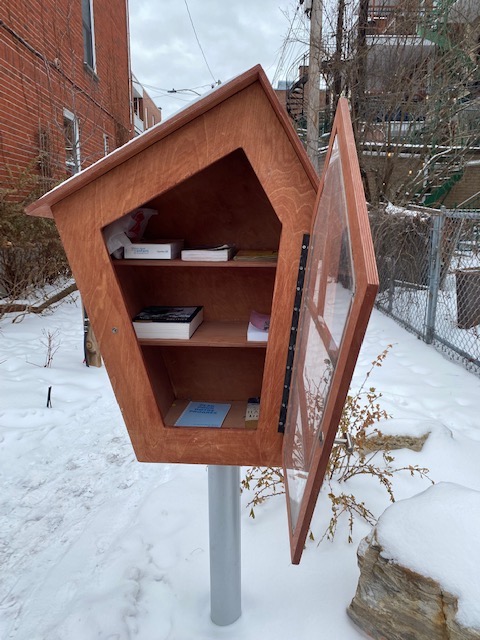
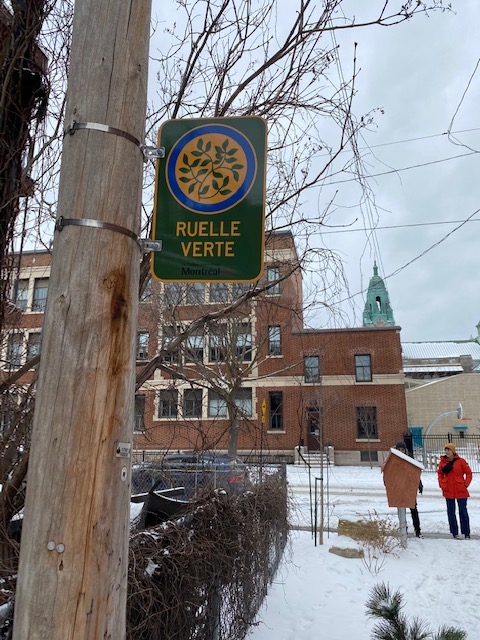
Other finds along our route included what appeared to be an outsized bird feeder that turned out to be filled with books to exchange for free.   Every few blocks the entrance to an alley was posted with a Ruelle Verte (green lane) sign.  In the Spring, these alleys will be cleared and landscaped by those who access them for the pleasure of locals and the public.  The Ruelle Verte improvement project began in 1997 and now numbers more than 400 alleys in Montreal.  A published guide to the 20 best alleys for walking testifies to its success. 


I look forward to getting to know Montreal better when Covid subsides and the snow melts. 


Best wishes to all for a healthy and productive New Year!


  • Written by Madelaine Bullwinkel

HOW TO OVERCOME SOCIAL DISTANCING

Welcome to a double helping of updates from my holiday kitchen.   


The list of items I check before leaving home grows longer in December.  To the essentials - car keys, credit cards, phone – I add a jar of preserves.  Whomever I’m going to meet will receive a small treat from my kitchen.  The fact that my friend doesn’t expect a gift makes the moment all the more pleasurable.  Homemade gifts have the power to overcome social distancing.   


I have made it a calling to streamline fruit preserving techniques to their utmost efficiency.  If sales of my cookbook, Artisanal Preserves, are any indication, the desire to make preserves has boomed this past year while we were all at home.  Amazon deserves a shout-out for continuing to save us time for making gifts at home.  Vacuum sealable glass jars in the half-cup gift size are now in stock at supermarkets,  hardware stores and, naturally, Amazon.  There are even more reasons to try your hand at fruit preserving this year.


My recipes are scaled produce four or more jars of gift-size preserves. Winter fruits like oranges and cranberries contain copious amounts of pectin that allows them to gel quickly when sufficient sugar is added.  These fruits also encourage the creation of delicious new flavor combinations when mixed with low pectin fruits.  We’ll get into that another time. 


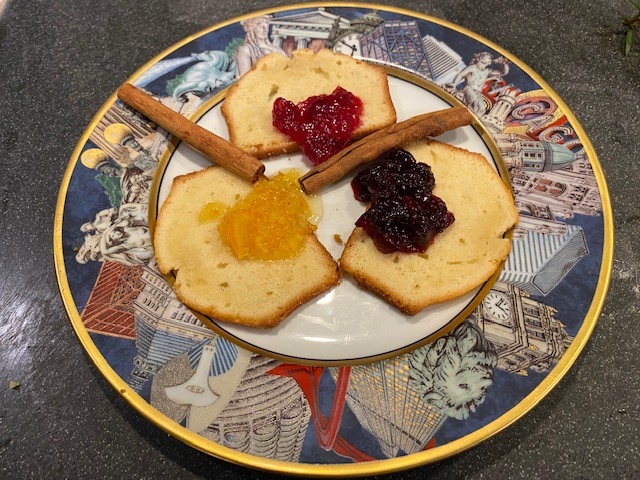
A spoonful of homemade preserves calls for a slice of homemade bread (although some friends have confessed consuming the contents right out of the jar).    Challah and brioche are the usual choices during the holidays. I recently discovered that the dense texture and whole grain flavor of Brown Soda Bread makes an addictive pairing with winter fruit preserves, and it’s easy to bake.  What took me so long?   


***********


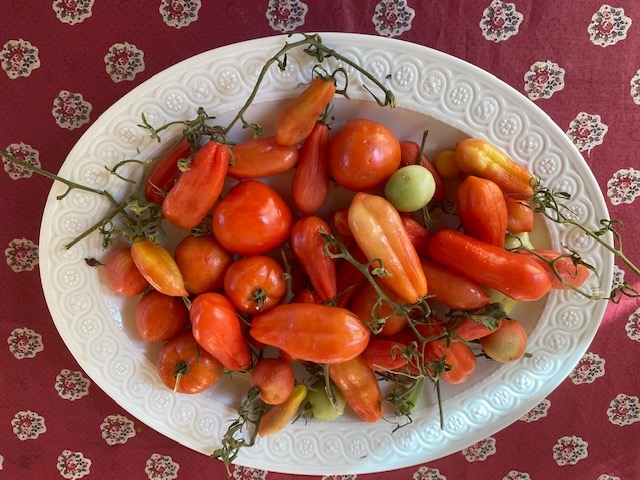
Last month I reported hanging several pounds of unripened tomatoes from twine in my basement when frost threatened in October.  I wasn’t kidding.  These tomatoes have slowly ripened in the cool, semi-darkness, the little ones wrinkling a bit with age.   I picked over the past two months them as they turned red and added them to sandwiches, salads and sauces.  Picking tomatoes in the basement felt strange, but it worked.


Yesterday was harvest day for the remaining pound or so of slow ripeners.  I culled those that were more red than green, cooked them in water and passed them through a food mill to remove their skin and seeds before I tasting the results.  The flavor was, unsurprisingly, that of an unripe tomato. 


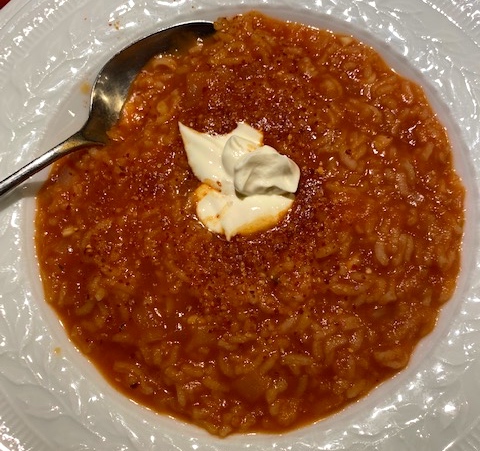
But I’d come too far to give up on my summer dream of growing tomatoes.  I summoned my inner Julia and created a soup  modeled after her Potage Magali ( Mastering the Art, vol. 2) without chicken stock, her Cordon Bleu staple, and with a fair amount of tomato paste and sugar.  The resulting soup was thick with the satisfying taste of tomatoes  Mission accomplished. 


Best wishes to all for a relaxed and satisfying holiday season! 


We will return with new cooking classes and travel destinations in 2022,