A+ A A-
  • Written by Madelaine Bullwinkel

EATING WELL IN PARIS
Les Papilles1


On occasion, I will enjoy a restaurant meal so much that I leave wishing I could move next door.  This happens rarely, even in Paris where the opportunities to find an unforgettable meal seem endless.  Finding a perfect combination of atmosphere, cuisine and service at a reasonable price is worth sharing.   That's why I want to tell you about my recent lunch at Les Papilles.

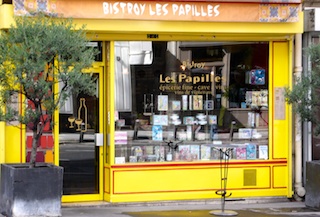
Even the most direction-challenged visitor can’t miss this bistro’s bright-yellow store front flanked by olive trees near the corner of Blvd St Jacques and rue Guy Lussac (5th).  The owner Bertrand BLUY greets you warmly as you enter and directs you to one of the small tables that line the walls.  The decor here is worth scrutiny because this place is also an épicerie, a grocery store.  What can a diner expect from a restaurant named 'taste buds' that sells squid ink pasta and tinned sardines?  

The relaxed setting at Les Papilles did not prepare me for the gastronomic meal I was about to enjoy.  In fact, such a possibility appeared unlikely after I peeked in the kitchen and found it is about the size of a closet in suburban Chicago.  I couldn’t imagine how the chef and his one sous-chef managed to stay out of each other's way!   

Given the size of the kitchen, Les Papille’s single menu format is not surprising.  Diners can order all four courses (there is also salad option), or any combination à la carte.  I opted for a starter and main course.
Les Papilles2


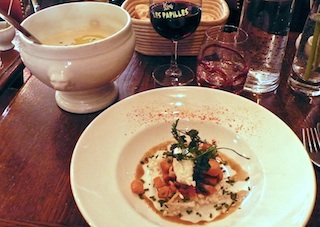
My order of cauliflower soup was served in two parts.  First the waiter place a large porcelain generously filled bowl on the table.  It was followed by a large soup dish containing a scoop of creme fraiche the size of a large egg, bits of raw cauliflower, tiny buttery croutons, a stem of fried parsley and a drizzle of olive oil.  I was instructed to ladle the thick soup into the dish and stir well before tasting.  It was delicious.


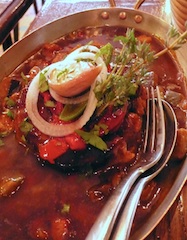
The main course of lamb shoulder with provencal vegetables was presented in a copper gratin dish still hot from the oven with a plate on the side.  Once again, every aspect of the dish, from the tender meat, al dente vegetables and silken demi-glace was perfectly executed.  The chef’s added garnish of cloves of garlic confit and a layer of sugar-snap peas and onion slices provided a bright, sweet accent without distracting from the traditional theme..  I could imagine the fanfare with which he stuck the sprig of fresh thyme into the meat just as it left the kitchen.
 

Les Papilles3


I'd forgotten how nice it is to serve yourself from a generous portion.  It gives the diner a sense of familial participation.  Too often restaurant food arrives posed and contrived. This fall I’ve been underwhelmed on occasion by meticulously arranged plates garnished with fruit.  Two examples come to mind: octopus with melon and pickled cherries, also watermelon and radish slices with veal.  I suppose I was primed to appreciate the skill and humility of the traditional cuisine at Les Papilles.

With a glass of red wine from southwest France and a coffee, my bill came to 36 Euros.  Had I been able to eat the cheese course which was  Forme d'Ambert, a mild blue cheese from the Auvergne, with prunes and one of the two cold desserts choices that day, the meal would still have been less than 50 euros. My papilles are still smiling.
  • Written by Madelaine Bullwinkel

SUMMER IN A SANDWICH

pan bagna1

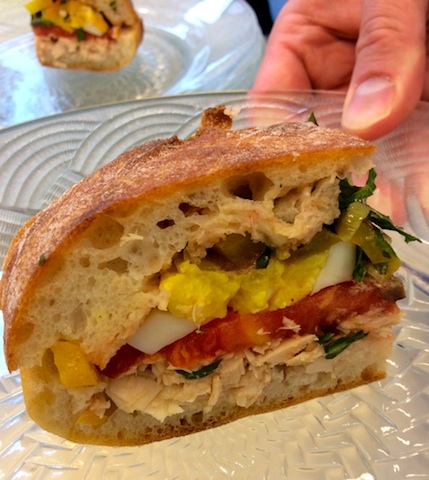
There’s one sandwich that seems to have everything going for it: crusty bread layered with chunks of tuna, sliced hard-boiled egg, garden tomatoes, olives and crunchy raw vegetables.  Is it just a sandwich or is it salad?  Both, actually.  Pan bagna, is a Niçoise salad enshrined in a sandwich.  It’s the perfect centerpiece for a casual picnic or  terrace dining on a hot summer evening with a glass of rosé.

PanBagna2

Pan bagna is Provençal French for moistened bread, not soaked, just softened as in bread salad.   It’s essential to select a flat crusty loaf with a coarse texture that will soak up juices.   Italian ciabatta bread is perfect.  

PanBagna3


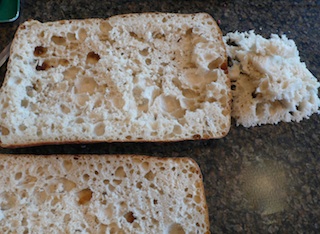
Anyone who loves working with Provençal ingredients will enjoy constructing a pan bagna.  Work begins at least one-and-a-half hours before serving.  The bread is halved along its length and the interior is removed to make room for the filling.  The surface of the bread is rubbed with a halved clove of garlic followed by the cut surface of a halved tomato.  The exposed bread halves are then lightly seasoned with olive oil and red wine vinegar.

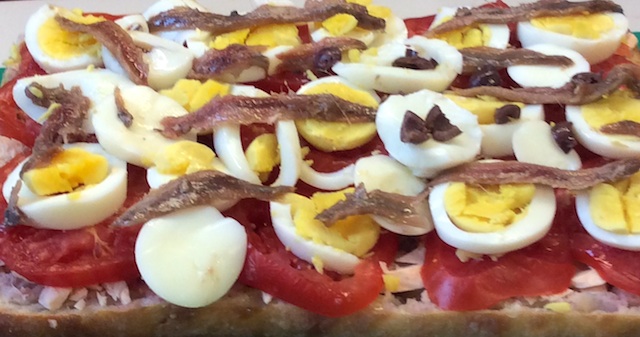
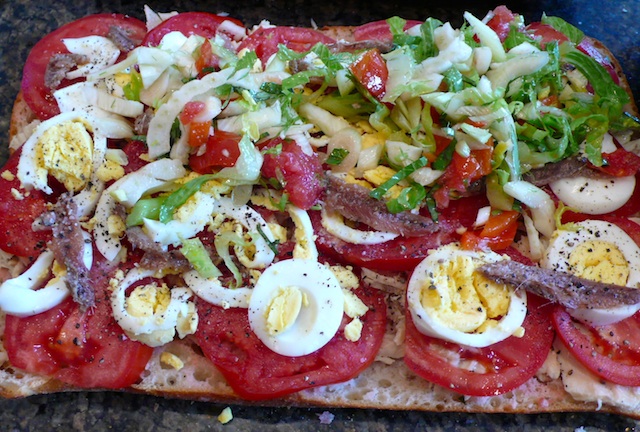
The filling consists of successive layers of white albacore tuna, sliced tomatoes, hard boiled eggs and anchovies.  At this point, the sandwich looks full, but there’s more!  This filling is covered with a tossed salad of romaine and basil, Niçoise olives, celery, scallions and yellow bell pepper.  On other occasions I’ve substituted thinly sliced zucchini, fennel or radishes. It depends on how much crunch you want.

PanBagna4

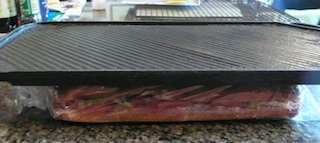
After mounding the salad over the filling, the hollowed-out lid of the ciabatta bread is put in place.  The loaf then needs to sit an hour before serving so the juices from the filling can continue to penetrate.  First wrap it tightly in plastic, then weight it evenly and hold it at room temperature for an hour or longer.  Enjoy!

PanBagna5


One pan bagna will serve eight persons.  It's worth making a whole loaf even if you're only two or four.  Pan bagna tastes delicious served cool from the refrigerator the next day.

Here is the link to the recipe:  http://www.chezm.com/welcome-to-recipes/59-uncategorized/807-sandwich-nicoise-salad

  • Written by Madelaine Bullwinkel

A BURGER MAKE-OVER

Burger1


I’m happy to report my recent dining conversion from knife-and-fork wielder to a pick-it-up-in-your-hands fan of America’s iconic hamburger and fries. For so many years I have regarded the hamburger as an over-laden sandwich of so-so beef in a soggy bun that had to be wolfed down before it dripped on your clothes. I wrote off burgers as a comfort food people ate out of habit not for pure pleasure.

That all changed recentl when Jimmy Bastable, an avid cook who would make a great chef if quite his day job, described his favorite burger mixture of equal parts ground beef short ribs, brisket and chuck.  It sounded delicious.  Whole Foods Market stores grinds up a limited amount of this premium mix for customers on summer weekends. But, it is not a proprietary formula. Any butcher can prepare this ground meat, although you may have to commit to purchasing more than a pound or two.  Yes, it's more expensive than ground round steak, but it’s worth it.

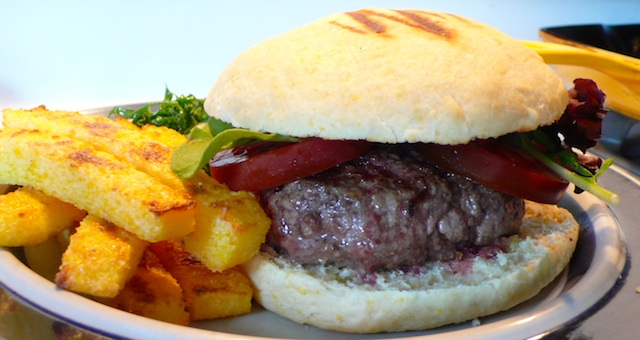
A burger this delicious deserves to be eaten slowly on a bun firm enough to hold the contents, tender enough for a child to chew, yet dense enough to absorb meat juices. Store-bought hamburger buns are cloyingly sweet, soft as Kleenex and filled with additives not found in nature.  So, like the little red hen, I elected to make my own hamburger buns using a recipe adapted from the King Arthur Flour's website. I eliminated the sugar and added more butter.  (Recipe link)

Preparing fries to accompany this splendid burger was another challenge until I realized they didn’t have to be made with potatoes. Polenta fries are easy to make ahead and finish at the last minute.   Cooking the corn grits takes five minutes. Once it has cooled to a firm consistency in a bread pan, I cut it into half-inch-thick fries and brown them under the broiler while the burgers are grilling. (Recipe link)

A dinner plate  at our house is not complete without some greenery. My favorite quick salad this summer is a kale slaw made by tossing thinly sliced curly kale (stem removed), red bell pepper and scallions in a classic mustard vinaigrette (Recipe link).

I’ve finally arrived at a plate of hamburger and fries worth picking-up and savoring slowly at my summer table. Thanks, Jimmy!