- Written by Madelaine Bullwinkel
DEPT OF DECEPTION: CANNED PUMPKIN PUREE
My decades-long search for a pumpkin that tastes as good as butternut squash is over. I have spent years secretly substituting squash for Libby’s pumpkin puree in vain. It turns out that Libby's has been following the same deceptive practice! This is a moment of mixed disappointment and relief. I know how Linus will feel when he finds out there is no such thing as ‘The Great Pumpkin’.
The New York Times recently broke the news that the main ingredient in Libby’s pumpkin puree is Dickinson squash, a variety similar to butternut. Pumpkin and squash are in the same family of fruits (because they have seeds), and a government rule allows manufacturers to use generic labeling. It doesn’t take much marketing savvy to figure out that a can with a pumpkin puree label will sell better than one that says squash. This food industry sleight of hand is harmless, but it doesn’t inspire confidence either.
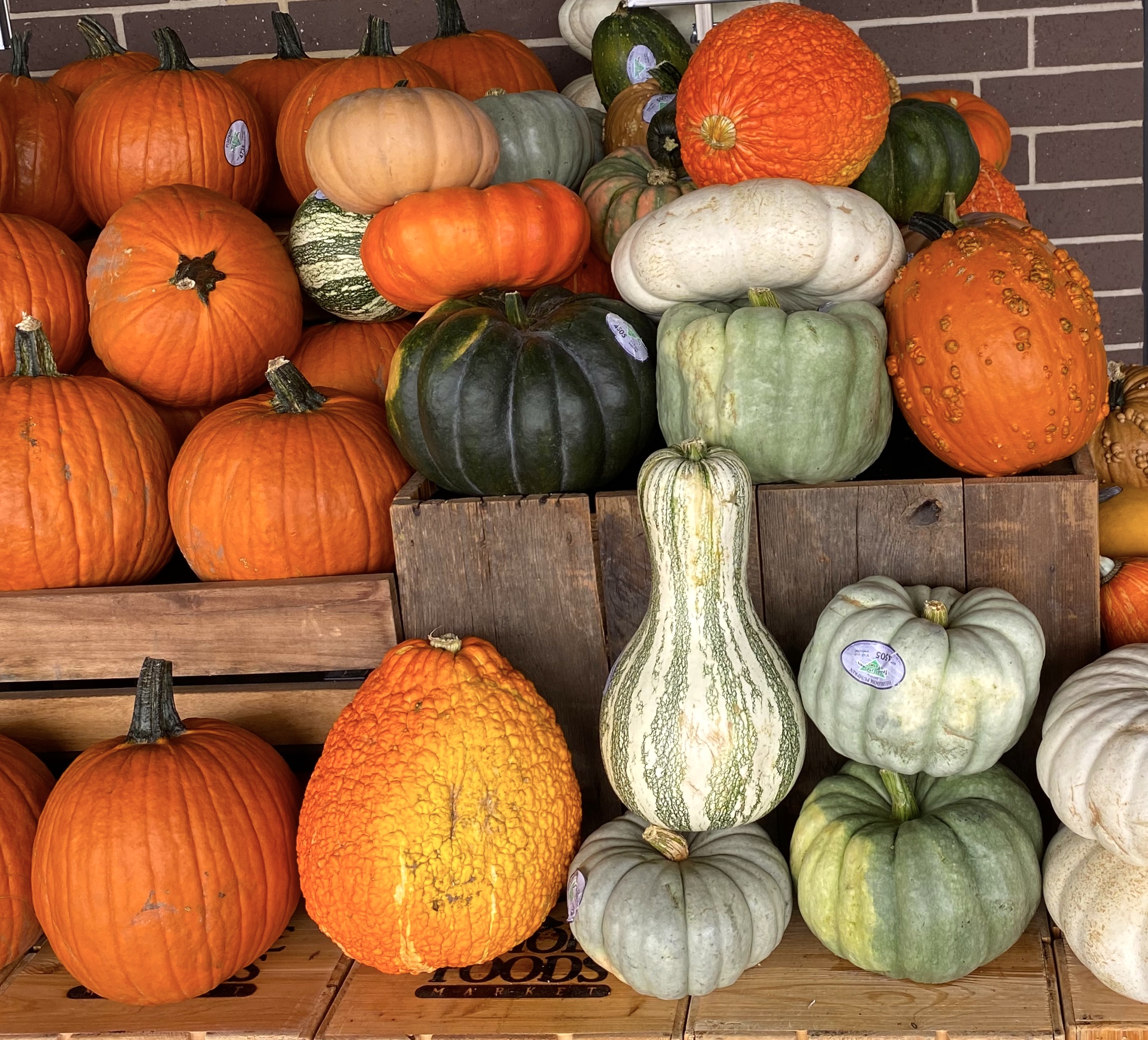
By all that’s right, hard-shell squash ought to be wildly popular throughout the winter months. It draws attention in the produce section with it's quirky shapes, colored stripes and benign warts. The interior is a sunny yellow to orange color, is tender when cooked and slightly sweet.
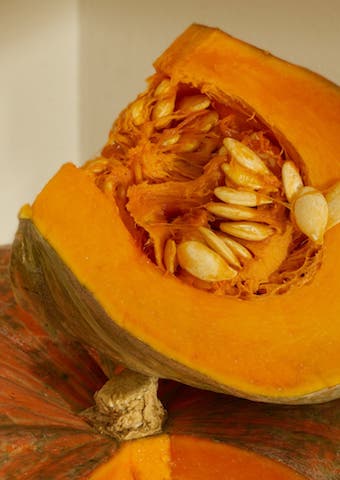
I haven’t peeled a squash in years, following the lead of a French chef in Provence. Give it a try. Simply halve and seed it; place it in a 350-degree oven on a baking sheet lined with parchment for 30 minutes, or until it can be easily pierced. The skin softens with cooking and offers a slightly chewy texture. A tender. cooked squash makes a delicious container for an entrée, stuffed in any number of ways, or as side dish, sliced and drizzled with butter.
There is so much to celebrate when eating squash, starting with the fact that it is native to the Americas and was farmed by indigenous peoples as early as 7000 years ago. Winter squash is also densely packed with vitamins, minerals and fiber, yet is low in calories and price. It’s worth mentioning that the orange pigment in squash flesh provides 200% of our daily requirement of Vitamin A which supports our vision and boosts the immune system.
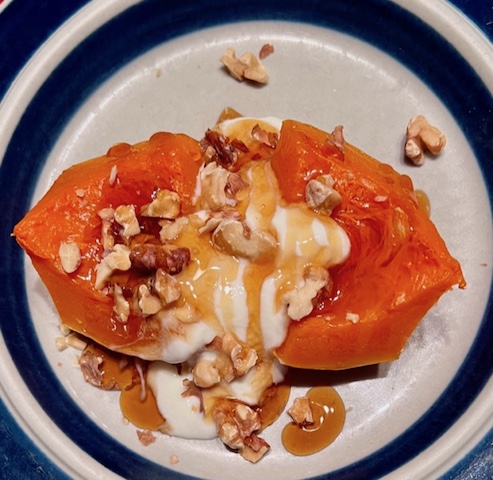
You will find a number of pumpkin and squash recipes in the Chezm.com website archive. In fact, I riffed on butternut squash in a blog just a year ago. This year I have a new super easy dessert recipe to share: Butternut Squash with Yogurt, Walnuts and Honey.
Enjoy!