- Written by Madelaine Bullwinkel
HUNGARIAN RATATOUILLE
The dictionary definition of Lecsó calls it is ratatouille which isn't fair to either dish. Ratatouille is a side dish of braised Mediterranean vegetables popular in the south of Franc while lecsó adds animal protein to fewer vegetables which makes it a meal. Strangely enough, Pixar Studios came closest to capturing the meaning of both words. It created a film starring a computer-generated rat named Ratatouille who wins over a snooty critic with a serving of his namesake dish and restores a failing restaurant to its former Michelin glory. Which is a roundabout way of saying that lecsó and ratatouille are homemade comfort food.
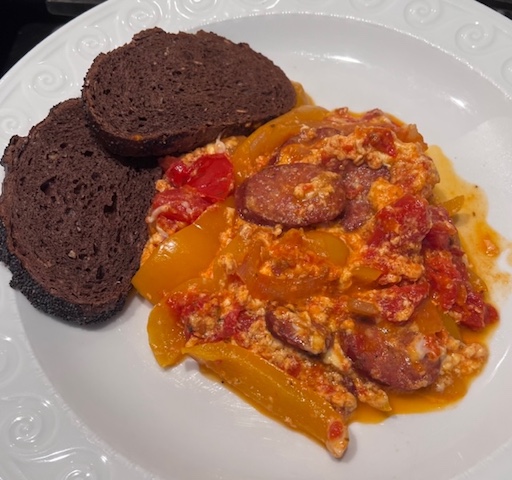
In contrast to the numerous vegetables in a ratatouille recipe, the Hungarian recipe focuses on three: onions, yellow bell peppers and tomatoes. The Magyar recipe is also culturally bound to include slices of smoked sausage, spicy paprika and eggs. The photo below shows recent travelers in Budapest preparing lecsó under the watchful eye of chef instructor Marti.

It’s important to begin this stew with real Hungarian smoked sausage to infuse the vegetable oil with aromas that will coat the vegetables. These are added, one after the other, so insure that each retains its identity. The inclusion of smoked paprika further heightens the scent of a wood fire setting and the eggs both bind and enrich the other ingredients. The technical skills required to make lescó are basic. The tomatoes are not peeled or seeded. Juices can be reduced to suit the cook.
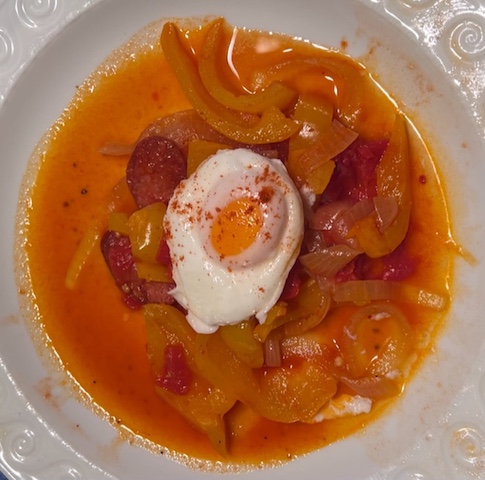
Lecsó is particularly tasty during these last days of the fall harvest when its main ingredients are still available at local farm stands. Plan to make more Lecsó (up to the point of adding the eggs) than you can eat in one sitting. Its flavors improve with reheating. The second (and third) time around I forgo scrambling eggs in it, and, instead, add a French touch by placing a poached egg on top.