- Written by Madelaine Bullwinkel
TAKEAWAYS FROM HUNGARY
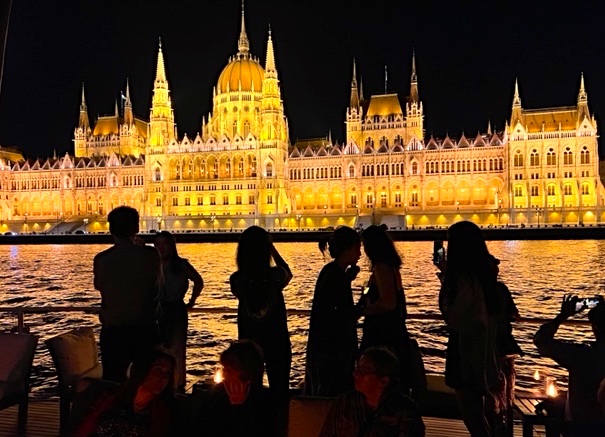
Last month fourteen eager travelers made an eleven-day pilgrimage across Hungary in a minivan. Our journey began in Budapest where we visited historic places by day and admired the city’s glittering shoreline at night. From a boat on the Danube, Budapest’s brightly lit Castle Hill, Parliament and bridges look as glamorous as they did when this city rivaled Paris in the late 19th century. That was the city my father left as a young man on the eve of the Second World War.
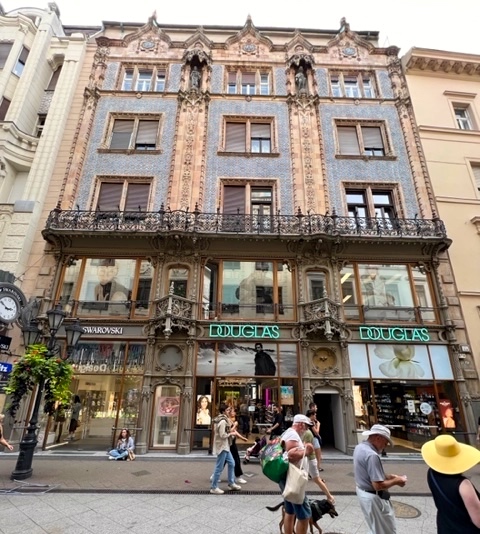
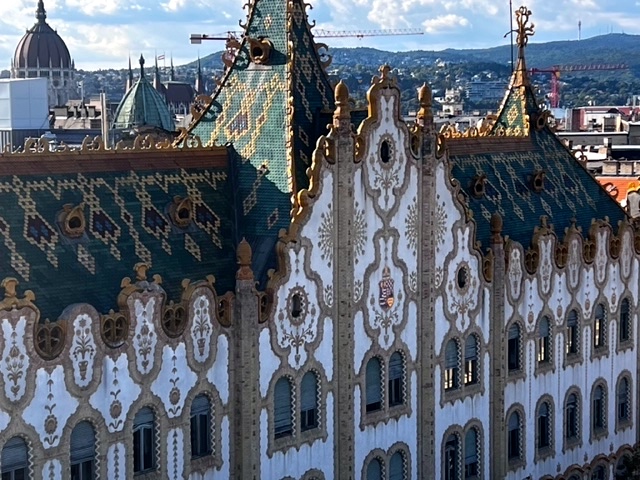
Although he lived to see Hungary freed from communism in 1989, my father would be appalled to see the way fast food chains and franchises today have invaded the city’s commercial center. That is, until he looked up. Stunning Art Nouveau facades still rise and gleam with colorful patterned tiles above the veneer of modern life. They signal the enduring cultural tenacity of this small country, isolated as it has been by its unpronounceable native tongue and run by an autocratic government, as it has been for much of its 1000-year-old history.
I chose to explore Hungarian resilience outside its capital, in places designated by UNESCO as examples of its intangible heritage. Two gifted wine and food specialists planned our cross-country itinerary making sure each day was also one of gastronomic discovery. We were equally grateful to have a gifted guide and driver both of whom shared their knowledge, experience and sense of humor with us. I am sure my father would have it enjoyed it.
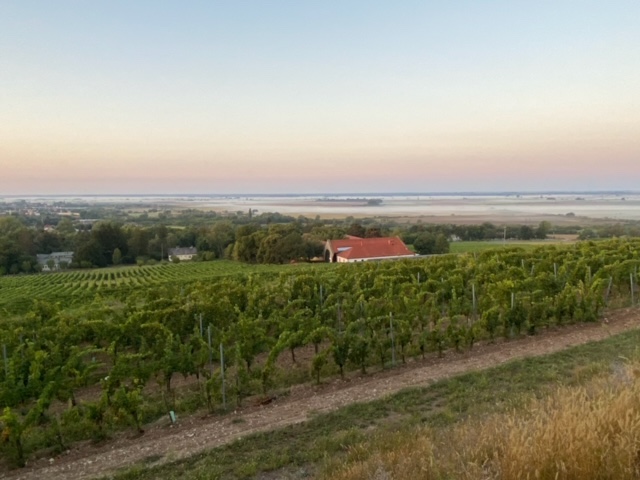
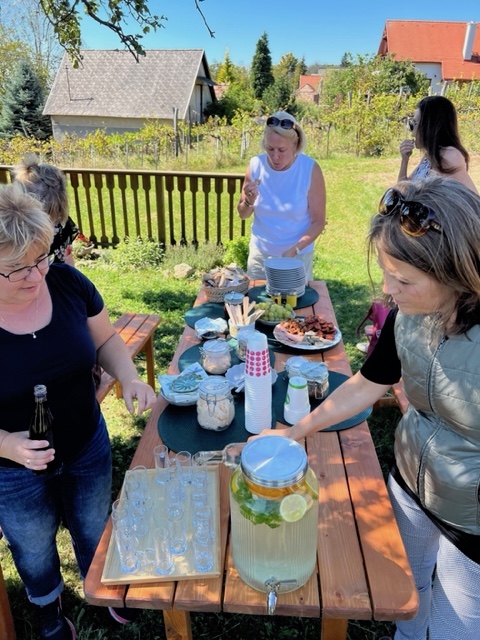
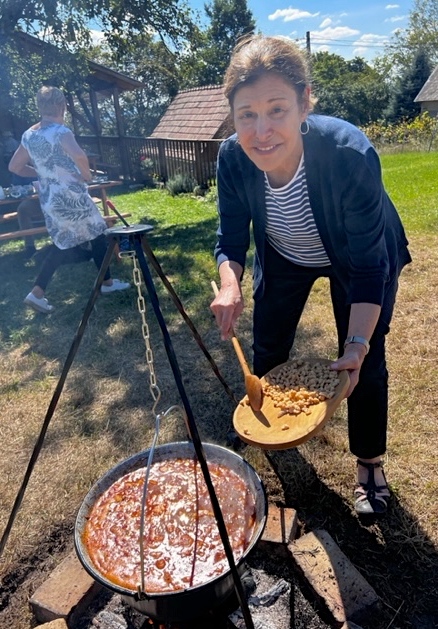
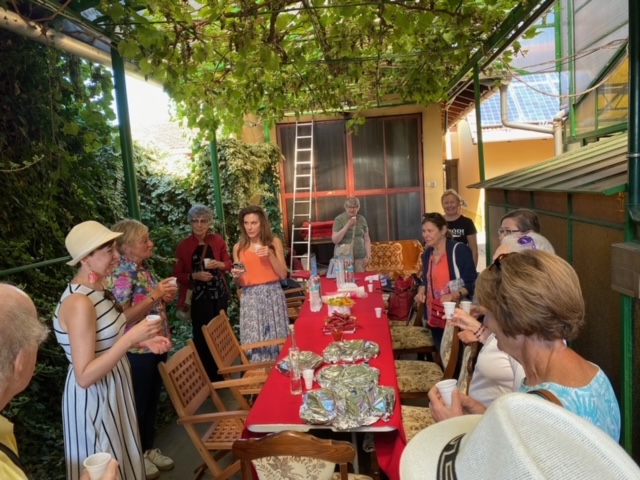
Budapest travel agent, Csilla Jalósi showed us the full extent of Hungarian hospitality by inviting us for a traditional goulash cookout at her weekend home and vineyard an hour’s drive from Budapest. We arrived to find a stew bubbling in a cauldron over a wood fire behind the house. We accepted a traditional welcome shot of fiery palinka (fruit brandy) and an assortment of sliced sausage, pickled vegetables and a spicy cheese spread with bread. Csilla then put us to work making pasta for the goulash. We ate on a large porch attached to the house and drank Csilla's wines with steaming bowls of goulash
.
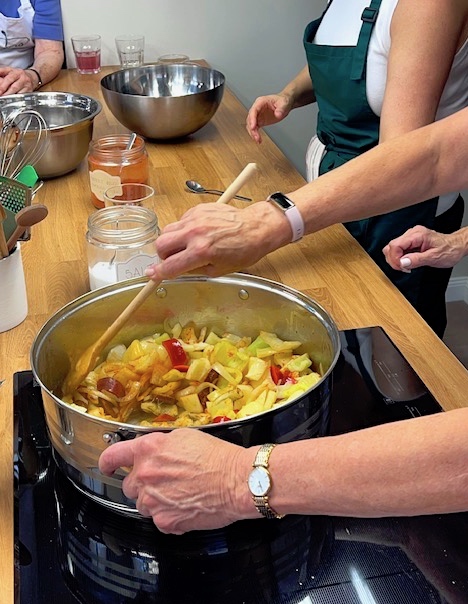
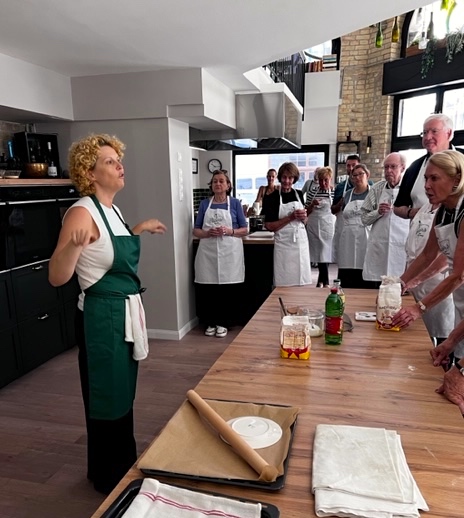
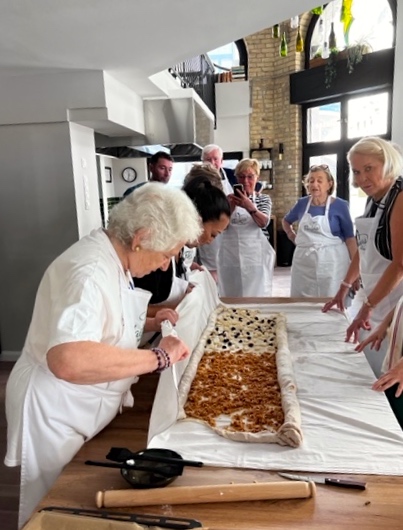
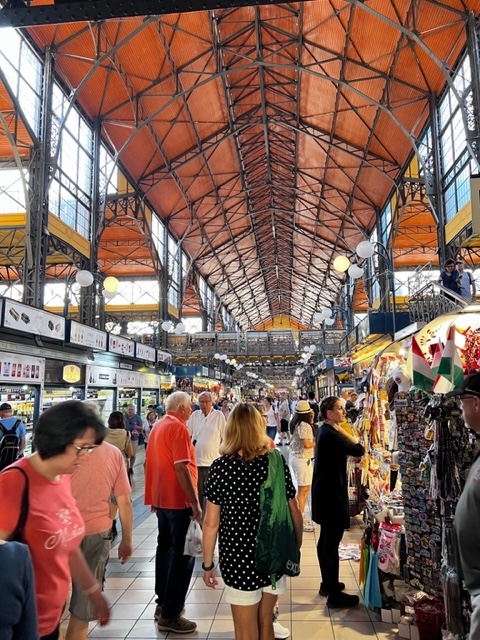
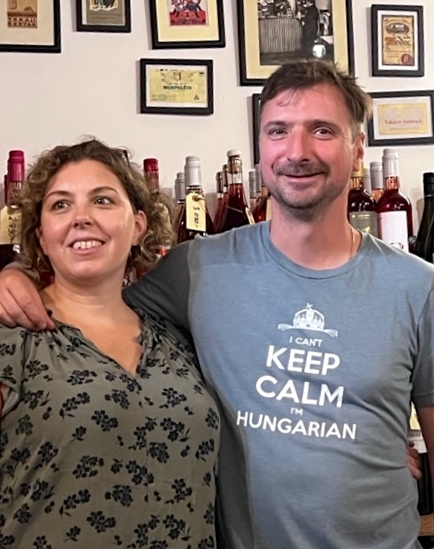
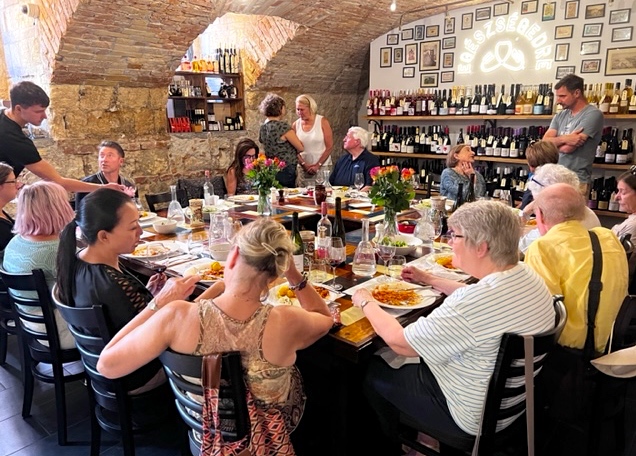
Claudia Royston, a Chicago travel agent and colleague arranged for us to experience an intimate luncheon of paired wine and food with Carolyn and Gabor Banfálvi at Taste Hungary, their unique tasting table and wine shop in the heart of Budapest’s financial district. We began the day with a trolley ride to Budapest’s 127 year-old Central Market Hall where a guide introduced us to Unicum, a bitter 18th century digestif, and Hungary’s irresistible street food, langos, that resembles a puffy pizza but is covered with garlicky sour cream and a generous layer of shredded Emmentaler. A sampling of sliced sausages and bacon cracklings was followed by a tour of the market’s basement level where we purchased pickled vegetables that accompany every home cooked Hungarian meal.
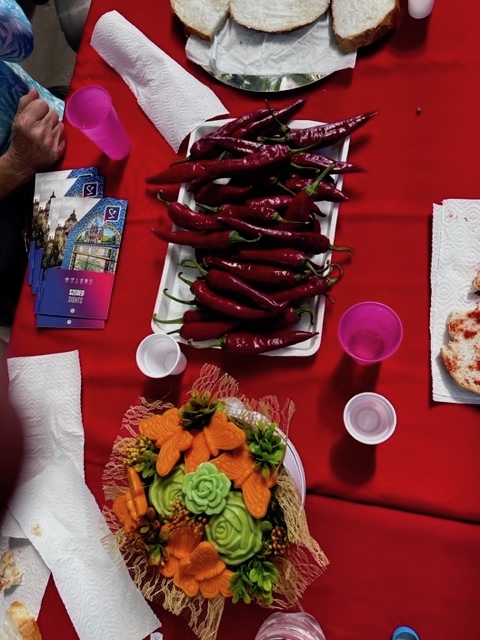
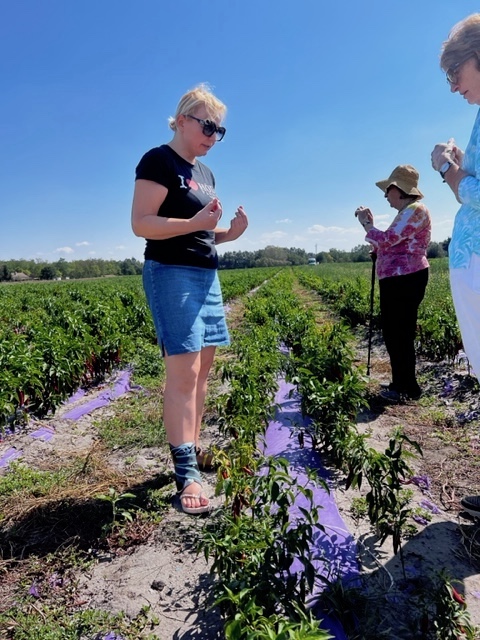
No trip to Hungary is complete without an up-close and personal encounter with Hungary’s famous paprika peppers. We visited the Hodi family operation now run by fifth generation member, Agota Hodi. She welcomed us with bread slices that we slathered with goose fat and sprinkles of sweet and hot paprika. The three ingredients made an unforgettable combination. Agota talked about the challenges of raising the family’s eighteen acres farm to meet the EU’s organic standard and competing with large mechanized Chinese operations. To make her point, she led us among the rows of pepper plants in one of their fields. Standing under a hot sun with Agota made clear how much hard physical labor is required to produce the fragrant powder we had so casually scattered on our bread.
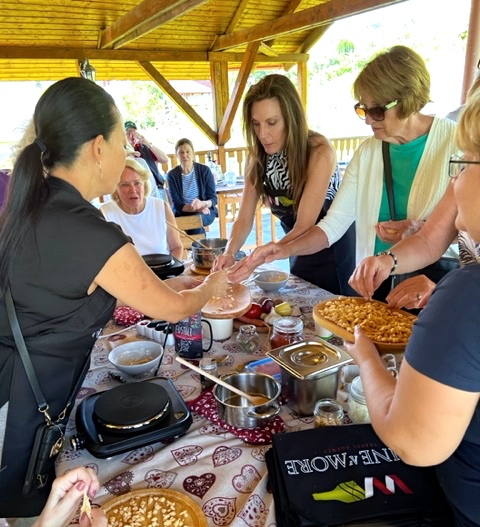
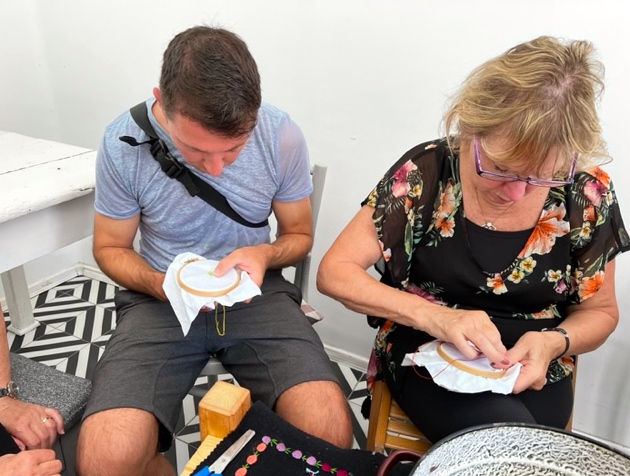
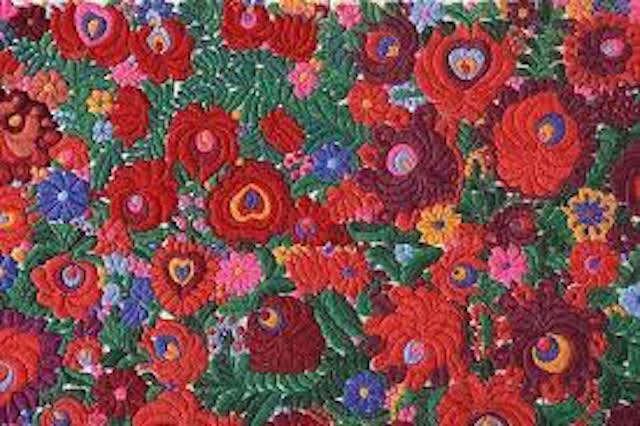
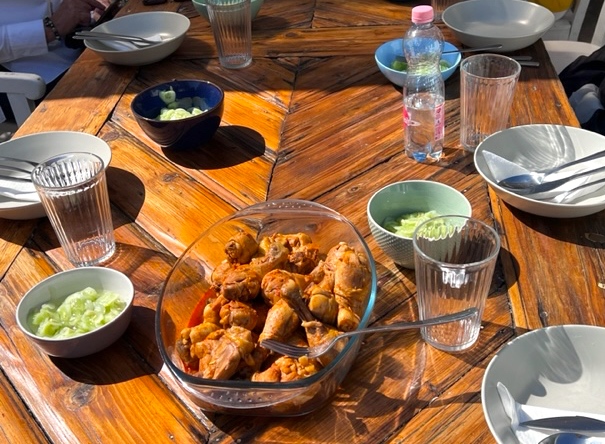
On our way to Tokaj in northeast Hungary, we stopped in the small town of Tard where a cooperative of village women has revived a 200-year-old tradition of Matyo embroidery characterised by dense, brilliant colored flowers. After a palinka welcome, we visited the small house-headquarters of Matyodesign that contains an office, a room for sewing clothing and showroom of finished products. The ladies had prepared loops with printed designs on cotton, needles and an array of colored threads and we proceeded to try our hand at this craft under the watchful eye of our expert hostesses. Meanwhile, in the nearby community center, members of the cooperative were preparing a lunch of chicken paprikash and an apple cake dessert. After lunch, we watched a demonstration of the hand-rolled pasta that accompanied the paprikash and, again, practiced this skill.
Among the many enriching experiences on our tour, these encounters with women and their families running small businesses were the most memorable and invigorating. Their commitment to improve the quality of life in impoverished regions and to enrich Hungary’s intangible heritage continue to inspire me. Yes, I will make this pilgrimage again. There is more to discover of Hungary's history and people. A tour in September 2024 is in the works. Details to follow.