- Written by Madelaine Bullwinkel
THE HISTORY OF THE "LOVE APPLE"
 t
Tomato lovers wait impatiently for late summer when they can eat them fresh off the vine. Home gardeners are now harvesting bright red and yellow globes from plants they have nurtured over the summer in a sunny space, in my case, a spot the diameter of a beach ball. Why go to tthe trouble when tomatoes in all sizes, colors and shapes are readily available and affordable throughout the year?
The reason is equal parts a love of the tomato’s natural flavor and my resistance to the flavor limitations imposed by our current food supply. There’s also the fascinating story of the tomato’s unlikely evolution from a bitter berry on a scrawny weed in what is now Peru two millennia ago, to today’s juicy heirloom descendants.
At the beginning of the early Christian era, Mesoamericans began hand- selecting seeds from plants whose bitter fruit was just a little larger and a little less alkaloid than its neighbors. By the time the first explorers returned with tomatoes from the New World, they had developed to become a yellow fruit with a mix of acidity and sweetness.
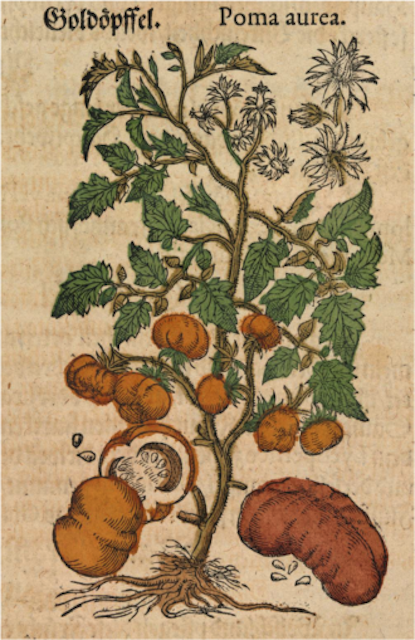
The first image of a 'Love Apple" by Mattioli in 1554
This New World plant received mixed reviews in16th century Europe. The tomato was considered toxic in places that stressed its membership in the nightshade family. The opposite view relied on biblical stories that related the resemblance of its forked root to the human body. A yellow tomato was the original ‘love apple’ with the powers of an aphrodisiac. (Any suggestion that modern tomato cocktails are ‘love potions’ is unintended.)
Contemporary heirloom tomatoes maintain their identity through seed collection just as pre-Columbian people nurtured the original tomato's development. These fruits are sweeter, tastier but more fragile than supermarket tomatoes that are hybrids, developed in the 19th century to serve the needs of commerce. The hardiness of supermarket tomatoes has come at the expense of their acidity, aroma and flavor.
Refrigeration remains the most demanding limitation all tomatoes place on those who want an optimal taste experience. Cold temperatures break down its cellular structure and arrest the fruit’s production of flavor volatiles. Cooking, on the other hand, has the beneficial effect of concentrating the tomato’s flavor and caramelizing its sugars.
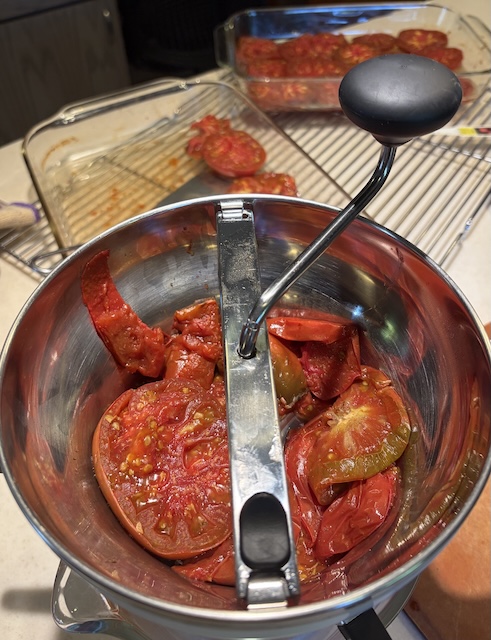
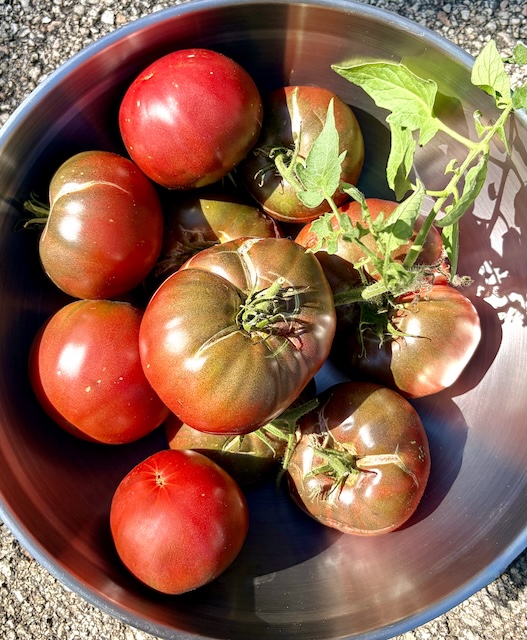
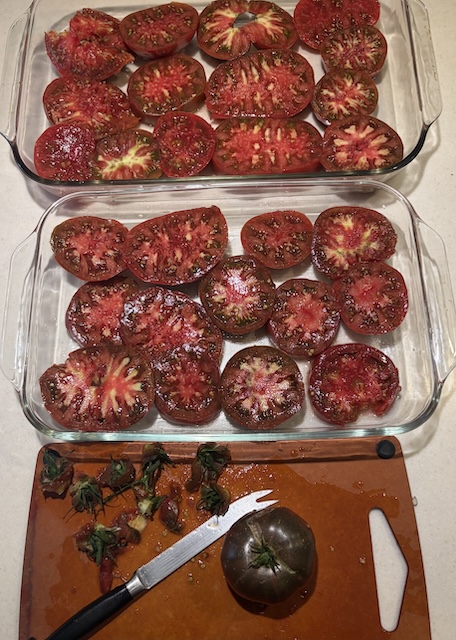
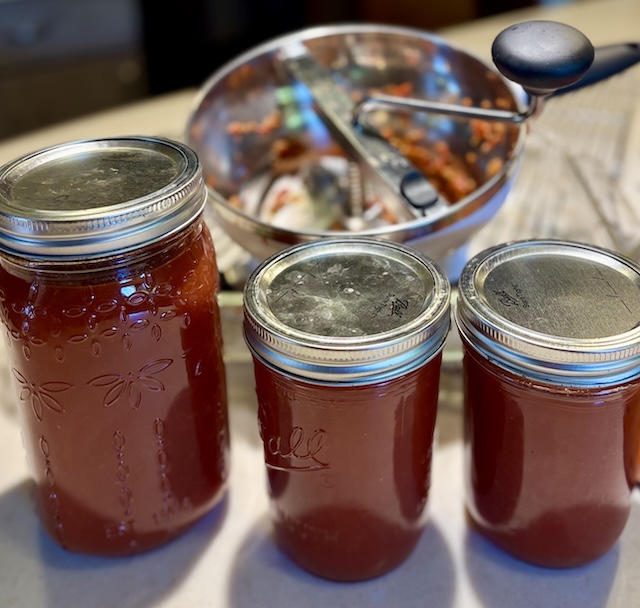
With this limitation in mind, I harvested my Cherokee Purple tomatoes last weekend from a single plant in my kitchen garden. The first ones to ripen were cut into thick, moist slices for sandwiches and diced in salads. The remaining fruit ripened soon thereafter, a characteristic of heirlooms. I sliced and roastied them for 40 minutes in a 400 degree oven, strained out seeds and skin in a food mill, then froze the puree to use in sauces and stews during the holidays.
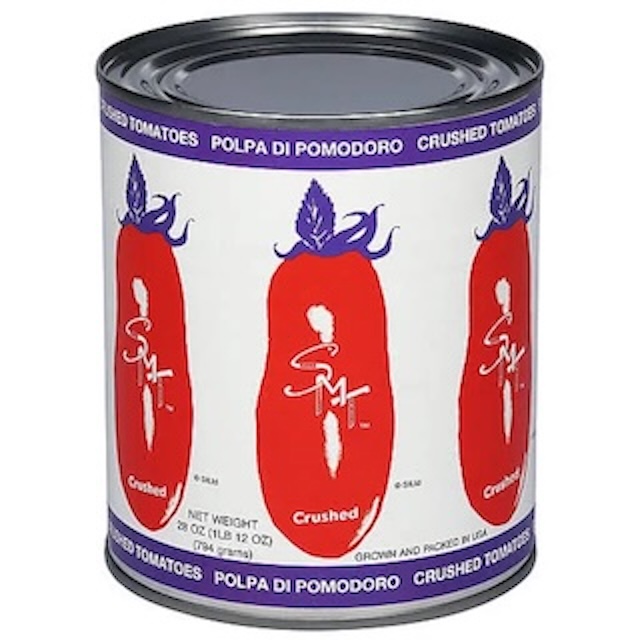
The rest of the year I rely on San Marzano tomatoes purchased in 28 ounce cans, whole, diced or pureed, available in most parts of the country. These are heirloom tomatoes grown on volcanic soil in Italy and cans bear the DOP insignia, an EU-sponsored mark of quality. Shop carefully and avoid the copycat San Merican brand tomatoes; its label is almost identical, its contents are not.